REVIEW · SEDONA
Grand Canyon and Sedona Self-Guided Driving Tour Bundle
Book on Viator →Operated by Adventures with Action · Bookable on Viator
Your car becomes the tour guide. This self-guided audio bundle strings together Sedona red-rock stops and the Grand Canyon South Rim viewpoints, with offline listening and stories that trigger by location. I especially love the hands-free pacing—start, pause, and linger when you want—and I love the value of paying per car for up to four people. My main caution: you need to download the tour in advance and begin at the correct starting point, or you can hit dead air.
You’ll drive your own timing through both places, including short hikes and classic viewpoints. The audio basically does what a calm friend in the passenger seat does: tells you where to stop, what you’re looking at, and when to get out for a photo.
In This Review
- Key Points at a Glance
- Price and What You’re Really Buying for $24.99
- How the Offline Audio Tour Works (Without Wi‑Fi Drama)
- The one thing that can break the magic
- Sedona First: Cathedral Rock, Tlaquepaque, and the Red-Rock “Wow” Factor
- Tlaquepaque Arts Shopping Village
- Cathedral Rock Trail (steep, short, and serious)
- Courthouse Butte and the Stories Hidden in Sedona’s Names
- Lovers Knoll for photos and that perfect Sedona pause
- A Hollywood bend: Zane Grey and the film link
- Oak Creek: Where the Tour Lets You Breathe
- Shops, restaurants, and a low-key reset
- Pyramid Mountain Trail: the 2-mile loop with a sacred-note vibe
- Crescent Moon Ranch Road and the Choice Point Before the Ticket Booth
- Crescent Moon Picnic Site and Red Rock State Park: the best kinds of breaks
- Crescent Moon Picnic Site
- Red Rock State Park (286 acres of options)
- Handoff to Grand Canyon: South Entrance to the Visitor Center
- South Entrance Station and the Visitor Center setup
- Mather Point to Yavapai Point: the first “how is this real?” stretch
- Hopi House, Yavapai Geology Museum, and the Studio Rivalry
- Hermit Road via the Free Shuttle: the rim viewpoints in order
- Trailview Overlook to Maricopa Point
- Powell, Hopi Point, and the river views
- Monument Creek Vista, Pima Point, and that “quiet moment” idea
- Desert View Drive: Pipe Creek to Navajo Point and the watchtower finish
- Pipe Creek Vista and the California condor mention
- Grandview, Lipan, and Navajo Point altitude factor
- Desert View Watchtower (and the climb, depending on season)
- A quick note on hiking choices inside Grand Canyon
- Time, Timing, and How to Keep It Fun (Not Exhausting)
- Should You Book This Self-Guided Grand Canyon and Sedona Bundle?
- FAQ
- Does this tour work without cellular service?
- Is this a guided group tour with a person?
- How long does the driving tour take?
- What does the price include?
- How do I play the audio in my car?
- Do I need to download the tour before I arrive?
- Are any hikes required?
Key Points at a Glance

- Offline audio by design: download on strong Wi‑Fi/cellular first, then you’re good in areas with no service
- GPS-triggered stories: audio plays automatically as you move along the route (if you start correctly)
- Pay per car, up to 4: one purchase covers your whole group in the same vehicle
- Sedona + South Rim in one loop: Cathedral Rock, Oak Creek, Crescent Moon area, then Mather Point through Desert View
- Free park shuttles are part of the plan: your audio tells you how to use them on Hermit Road
- Lifetime access (no expiry): reuse the same tour on future trips
Price and What You’re Really Buying for $24.99
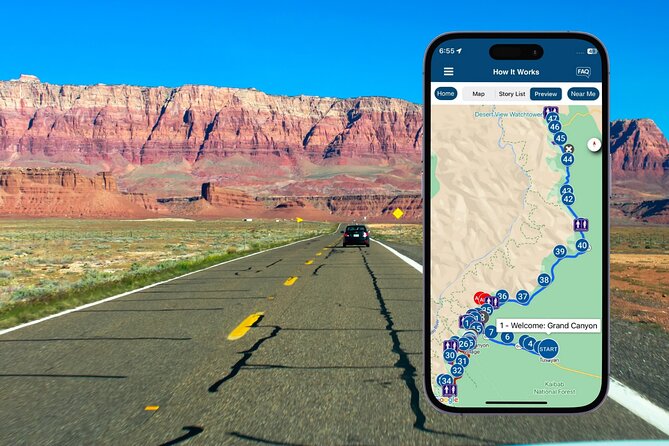
At $24.99 per group (up to 4 in your car), this bundle’s value comes from two things: control and cost. You’re not paying for a driver, a guide van, or a fixed group schedule. Instead, you pay for a guided-style experience you can repeat and rearrange.
Also, the “per car” setup matters at the Grand Canyon, where guided tours plus transport can add up fast. Here, you’re free to do short looks or long stays at each overlook. If motion sickness rules out jeep tours or bus tours, a self-drive setup can be a big win.
One thing to keep clear: the tour includes audio and maps, but it does not include park attraction passes, entry tickets, or reservations. In plain terms, you’ll still handle any park fees or ticket needs on your own.
You can also read our reviews of more guided tours in Sedona

How the Offline Audio Tour Works (Without Wi‑Fi Drama)

This is a true offline audio tour, but it only works that way if you prep first. After booking, you get a password by email/text and you download the Action’s Tour Guide app. You also download the tour content while you’re on strong Wi‑Fi/cellular, because the audio is meant to run offline afterward.
Once you’re onsite, there’s no person waiting to hand you a headset. You go to the starting story point, open the app, and the narration begins automatically. Then it keeps moving: audio cues play based on your location as you follow the route.
For sound, you can connect your phone to your car stereo using Bluetooth, USB, or AUX. If you’re mostly walking, headphones can work better than relying on car speakers.
The one thing that can break the magic
If you start at the wrong location or fail to download properly ahead of time, GPS-triggered audio can feel late or stop entirely. In that case, you end up driving around looking for the next “correct” spot, which defeats the whole purpose. For a smooth day, I’d treat setup time as non-negotiable.
Sedona First: Cathedral Rock, Tlaquepaque, and the Red-Rock “Wow” Factor

Sedona makes a strong opener. The tour starts by pulling you into the heart of the town—perfect if you want a classic mix of art shops, short scenic stops, and a hike option.
Tlaquepaque Arts Shopping Village
You’ll park and head into Tlaquepaque Arts Shopping Village, a big concentration of galleries and local crafts. This is one of those stops that’s worth it even if you’re not shopping hard, because it gives you a built-in break. Stretch your legs. Grab a snack if you want.
You can also read our reviews of more tours and experiences in Sedona

Cathedral Rock Trail (steep, short, and serious)
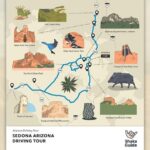
Then comes Cathedral Rock Trail. This is the trailhead for a steep 1.2-mile trek with about 800 feet of elevation gain. It’s labeled challenging, so treat it like a workout, not a stroll.
If you hike: go early in the day if possible, wear shoes with good grip, and expect your legs to do the talking. If you skip the hike: you can still enjoy views of Cathedral Rock from the surrounding viewpoints.
Courthouse Butte and the Stories Hidden in Sedona’s Names

Sedona is as much about stories as it is about rock shapes. The audio uses place names and landmarks to connect you to people, film history, and local traditions—so it doesn’t feel like you’re just staring at pretty walls of red.
A key highlight is the Courthouse Butte area. It’s one of those views that explains why Hollywood kept coming back. You can also access different trails from nearby parking areas if you want to choose your own level of effort.
Lovers Knoll for photos and that perfect Sedona pause
You get an easy-to-access scenic vista called Lover’s Knoll. It’s famous for romantic photo energy, but you don’t need a proposal plan to enjoy it. If you like skyline-style shots with minimal walking, this is your stop.
A Hollywood bend: Zane Grey and the film link
The audio leans into Sedona’s film connections too. You’ll hear about Zane Grey arriving in 1923 with a crew to make the silent film Call of the Canyon. It’s a fun reminder that this region became a set for imagination long before it became an Instagram habit.
Oak Creek: Where the Tour Lets You Breathe
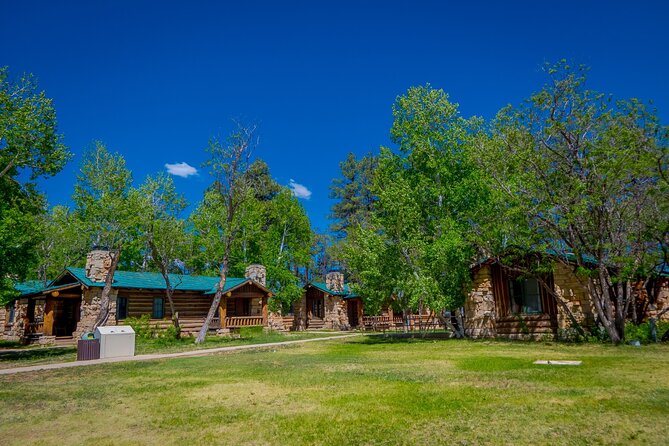
Next you roll toward the Village of Oak Creek, known locally as The Village. This part of the day is less about one dramatic overlook and more about convenience.
Shops, restaurants, and a low-key reset
The Village of Oak Creek is packed with spots to eat and wander. It also has three huge golf courses if that’s your thing. Even if golf isn’t your plan, this is a practical “reset button” during a driving day.
Pyramid Mountain Trail: the 2-mile loop with a sacred-note vibe
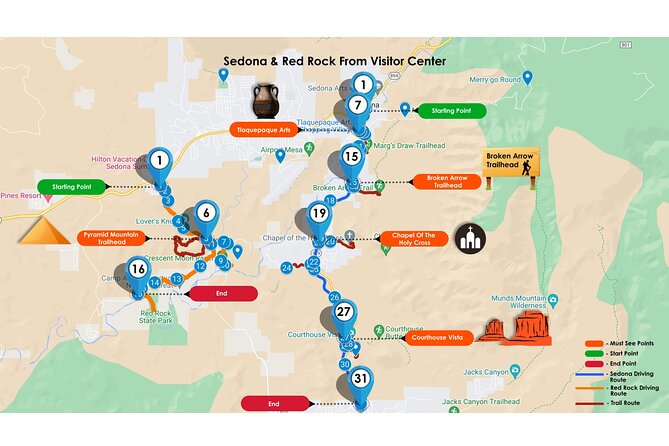
The tour includes Pyramid Mountain Trail, a 2-mile loop that takes about an hour. You’ll see it through the lens of both scenery and meaning, with the audio pointing out why some consider this land sacred.
Because it’s a loop and not too long, it’s a good mid-day hike when you still want energy for Grand Canyon later. If you’re with kids or you prefer gentler options, you might skip it and just use viewpoints instead—but if you want one “real hike” without a big time commitment, this is a solid pick.
Crescent Moon Ranch Road and the Choice Point Before the Ticket Booth
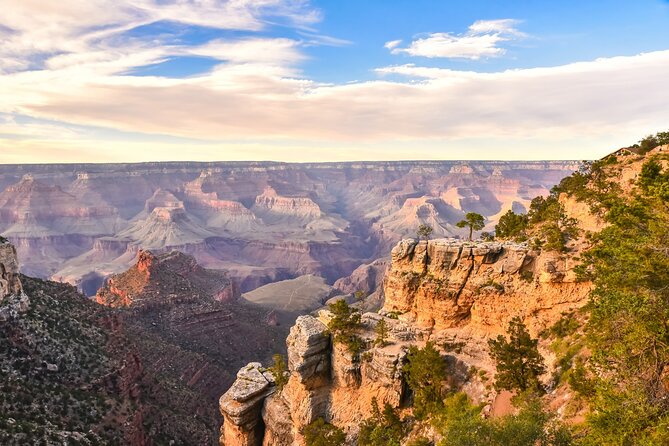
Crescent Moon Ranch Road comes next, and it’s one of the most “you choose your adventure” sections of the bundle. The stop includes a note that it’s worth the price, but you can turn around before the ticket booth if you prefer.
That choice is helpful. If you’re trying to keep costs tight, you can skip the paid segment. If you want the classic photo spot experience and creekside atmosphere, you’ll want to continue.
Crescent Moon Picnic Site and Red Rock State Park: the best kinds of breaks
Crescent Moon Picnic Site
The Crescent Moon Picnic Site is described as creekside and a sanctuary with spectacular views. Cathedral Rock is visible from here, and this is one of the most photographed Sedona viewpoints. There’s also swimming mentioned, so bring what you need if you plan to cool off.
If you’re tired of hiking, this is your reward: a place where you can sit, eat, and just watch the light on the rocks.
Red Rock State Park (286 acres of options)
Then you reach Red Rock State Park, a smaller but mighty 286-acre area. The audio points you toward hiking and biking trails, picnic areas, and scenic vistas.
Because it’s a state park with multiple options, it’s a good place to slow down and pick a short route rather than forcing yourself into one “must-do” hike.
Handoff to Grand Canyon: South Entrance to the Visitor Center
Once you’re at Grand Canyon National Park, the bundle shifts tone from Sedona’s red-rock storytelling to big-rim awe and geology.
South Entrance Station and the Visitor Center setup
Your tour begins near the South Entrance Station. The audio covers different entrance fee options, which is genuinely useful when you’re standing at the gate with limited patience.
You’ll then arrive at the Visitor Center for maps, park info, restrooms, and snacks. This is where you can plan your day, especially if you’re juggling the free shuttles later.
Mather Point to Yavapai Point: the first “how is this real?” stretch
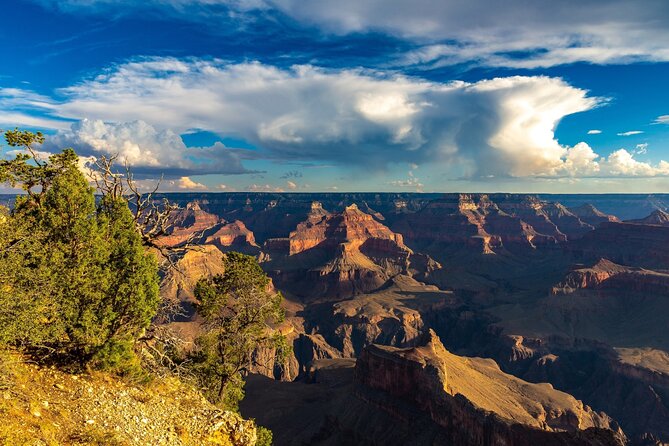
Your first overlook is Mather Point, one of the park’s most popular spots, with views spanning up to 30 miles across the canyon. Next you’ll stop at Yavapai Point, where the audio ties in the tribe name behind the point.
These early stops are where the canyon grabs you by the collar. You’ll get plenty of photo chances and enough time to orient yourself—important because later viewpoints can feel far more spread out.
Hopi House, Yavapai Geology Museum, and the Studio Rivalry
Inside the canyon village area, you’ll hit a few stops that turn the scenery into context.
- Hopi House: described as an accurate recreation of ancient Hopi dwellings, plus it’s a good souvenir stop
- Yavapai Geology Museum: exhibits aimed at understanding Grand Canyon geology
- Kolb Studio and Lookout Studio: you’ll hear about the rivalry between the two that nearly drove them both to ruin back in the 1900s
This is the part of the tour that helps you go beyond the obvious. The canyon isn’t just huge; it’s layered, shaped, and named through time.
Hermit Road via the Free Shuttle: the rim viewpoints in order
For the next part, you’ll hop on the park’s free shuttle. The audio gives instructions for using it, which matters because spacing and parking at the rim can be confusing if you try to brute-force it yourself.
Trailview Overlook to Maricopa Point
Trailview Overlook gives views of the Bright Angel Trail—the steep path down toward the bottom of the canyon. Maricopa Point adds unexpected history, including the story of uranium mining.
Powell, Hopi Point, and the river views
Powell Point honors explorer work tied to mapping the Colorado River. Then Hopi Point is where you’ll get bald eagle details and how to spot them. Mohave Point follows with a bird’s-eye look at the river.
Monument Creek Vista, Pima Point, and that “quiet moment” idea
Monument Creek Vista highlights intense rapids (Granite Rapids), along with a story about the first female river guide. Pima Point is framed as one of the best views of Colorado, and the audio even suggests that if it’s quiet you can hear water moving along the river.
This is a good reminder: you don’t always need to chase the biggest overlook. Sometimes the tour nudges you to listen and pause.
Desert View Drive: Pipe Creek to Navajo Point and the watchtower finish
After the shuttle, the driving part continues east along Desert View Drive. The route is packed with named viewpoints and story hooks.
Pipe Creek Vista and the California condor mention
Pipe Creek Vista is aimed at birders, with a shout-out to the rare California condor possibility. Duck on a Rock Viewpoint comes next—yes, it’s called that for a reason, because the rock shape has a strong visual match.
Grandview, Lipan, and Navajo Point altitude factor
Grandview Point is also a trailhead for a hiking route below the canyon rim. Lipan Point brings more geology facts. Then you reach Navajo Point, described as the highest viewpoint on the southern rim at about 7,500 feet above sea level.
Desert View Watchtower (and the climb, depending on season)
The tour ends at the iconic Desert View Watchtower. Depending on the season, you can even climb to the top for a different kind of view. This is also framed as a popular sunrise and sunset spot, and there are restrooms at this remote lookout and shuttle stop.
A quick note on hiking choices inside Grand Canyon
The bundle also explains why certain hikes feel different. For example, it covers the South Kaibab Trail, which follows a ridge toward Skeleton Point and is known for offering 360-degree canyon views.
If you’re not hiking, you can still learn from these segments. It helps you understand what you’re seeing from above, and why the rim isn’t just a viewing deck—it’s a branching map of trails.
It also includes Tusayan Ruins and Museum, presented as a great place to learn about ancient cultures with signage and a walk through the ruins.
Time, Timing, and How to Keep It Fun (Not Exhausting)
This bundle is listed as about 5 to 6 hours total. Realistically, your time depends on how hard you hike in Sedona and whether you spend extra minutes at the Grand Canyon village area versus jumping quickly down the rim.
Here’s a practical way to keep your day smooth:
- Do one “leg work” hike in Sedona (Cathedral Rock if you’re up for the incline, or Pyramid Mountain Trail if you want moderate effort).
- Treat the Grand Canyon viewpoints like checkpoints, not a checklist. Park shuttle stops make the flow easier if you let the audio guide you.
- Build in a sit-down moment at Crescent Moon Picnic Site or Oak Creek so the day doesn’t turn into pure driving.
One more pro tip: the tour covers a lot of stops. If your phone struggles with GPS while moving, make sure you’re not multitasking too aggressively. Low battery plus navigation can turn into a rough afternoon.
Should You Book This Self-Guided Grand Canyon and Sedona Bundle?
You should book if you want:
- A low-cost way to hit two major Arizona icons without paying for guided transport
- Offline audio that works well in areas with limited service
- Control over your pace, with the freedom to skip a hike or stay longer at a viewpoint
You should think twice if:
- You’re the type who hates app setup, and you’ll arrive without downloading beforehand
- You want a fully guided experience with guaranteed narration no matter what, like a traditional tour leader
- You’re relying on specific phone integrations and you need every compatibility detail to be perfect
If you do the prep—download on strong Wi‑Fi and start at the correct first story point—this bundle can feel like getting two classic days out of one car ride plan: Sedona for hikes and legends, then the South Rim for canyon-scale awe.
FAQ
Does this tour work without cellular service?
Yes. You need to download the tour while you have strong Wi‑Fi/cellular, and then it’s designed to work offline afterward.
Is this a guided group tour with a person?
No. It’s a self-guided, private experience. No one meets you at the start; you begin at the starting story point and follow the route cues.
How long does the driving tour take?
The bundle is listed at about 5 to 6 hours. The Sedona portion is described as about 2 to 3 hours to complete for the main route.
What does the price include?
You’re paying for the audio tour experience, including offline maps, hands-free location-triggered stories, and access to the route content. Park passes, entry tickets, and reservations are not included.
How do I play the audio in my car?
You can connect your phone to the car stereo using Bluetooth, USB, or AUX. The tour also works with Apple CarPlay (Android Auto support is mentioned as on the way).
Do I need to download the tour before I arrive?
Yes. You’ll receive a password and setup instructions, and you MUST download the tour content while you’re on strong Wi‑Fi/cellular. It will work offline after download.
Are any hikes required?
No. Some stops have optional trailheads like Cathedral Rock Trail and Pyramid Mountain Trail, but you can skip hikes and focus on the viewpoints and scenic stops.