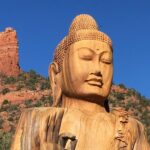
REVIEW · SEDONA
City of the Star People Tours
Book on Viator →Operated by Mark Amaru Pinkham · Bookable on Viator
Sedona has a way of pulling your attention toward the rocks. This 4-hour private tour brings you to some of the area’s best-known landmarks plus a guided meditation session, with stories that lean spiritual and cosmic. If you like Sedona beyond the postcard view, this one is built to help you connect the dots in real time.
I especially like the mix of big scenic lookouts and hands-on moments like meditation. The first two stops include admission tickets, so you’re not constantly wondering what costs extra. It’s also led by Mark Amaru Pinkham, who clearly brings a lot of personal research and patience for questions.
One thing to consider: the tour can feel classroom-style and belief-driven. If you want more time walking around on your own or you prefer strictly neutral, science-only explanations, this may test your patience.
In This Review
- Quick highlights
- Getting Started at Whole Foods and a 9:00 AM Start
- What the 4-Hour Format Really Feels Like in Sedona
- Stop 1: Sedona Airport Scenic Overlook and the Rock Lineup
- Stop 2: Amitabha Stupa and Peace Park Meditation at the Amitabha Vortex
- Bell Rock, Sedona’s 7th Chakra, and the Throne of Ganesh
- Temples, the Court of Masau’u, and Another Chimney Rock Moment
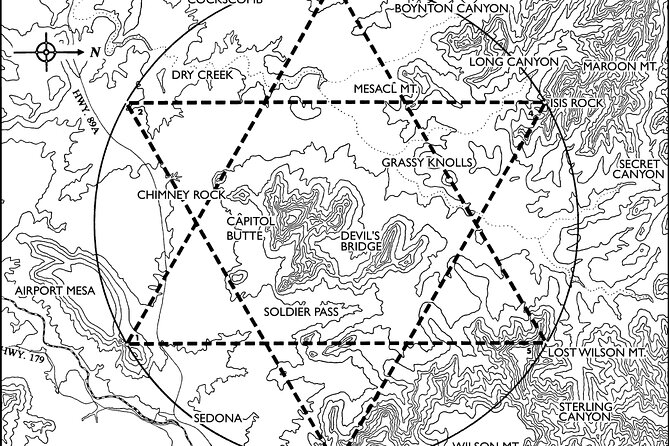
- Major Vortex on Sedona Grid and the Pleiadian Contact Zone
- Sphinx and Honey Bear: The Closing Visual Payoff
- Mark Amaru Pinkham: The Guide Style and Why It Can Matter
- Admission Tickets Included: Where You Get Value Early
- Group Discounts, Private Format, and How That Affects Your Day
- Who Should Book This Sedona Tour (and Who Might Skip It)
- Price and Value: Thinking Beyond the Number
- Should You Book City of the Star People Tours in Sedona?
- FAQ
- What time does the tour start and where do we meet?
- How long is the tour?
- Is it a private tour?
- What language is the tour offered in?
- Are admission tickets included?
- What are the main stops on the itinerary?
- Do I need good weather to go?
- How will I get the ticket?
- Who can participate?
Quick highlights
- Private group format: only your group participates, so the pace can feel more personal
- Admission tickets included at Stop 1 and Stop 2, so you get value early
- Amitabha Vortex meditation at the 6 Pointed Star Temple area, not just sightseeing
- A Sedona Grid and Pleiadian Contact Zone framing that shapes how you interpret the landmarks
- Multiple famous rock points in one circuit: from Great Dragon to Bell Rock and beyond
- A return to the start point at Whole Foods, making the morning plan simpler
Getting Started at Whole Foods and a 9:00 AM Start
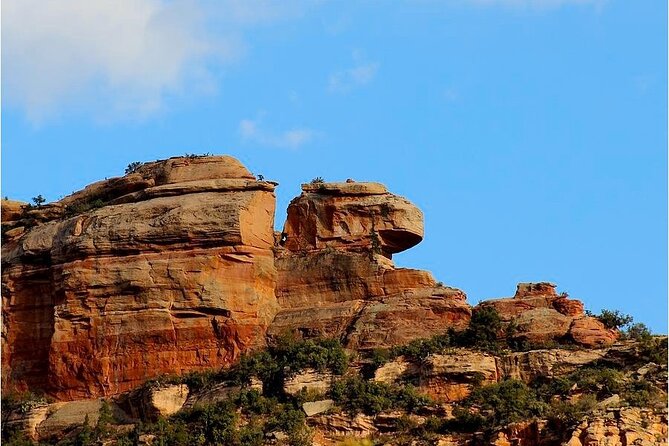
Your day begins at Whole Foods Market, 1420 W State Rte 89A, Sedona, AZ 86336, with a 9:00 am start. The tour ends back at the meeting point, which is handy if you want to keep the rest of your day free for hikes, shopping, or lunch without relocating your car.
You’ll get confirmation at booking and you’ll use a mobile ticket. It’s offered in English, and it’s marked as a private activity, meaning it’s run for your group only rather than a mixed crowd.
Because this is an out-and-about Sedona morning plan, good weather matters. If conditions aren’t right, you’ll be offered a different date or a full refund.
You can also read our reviews of more city tours in Sedona

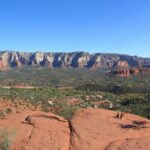
What the 4-Hour Format Really Feels Like in Sedona
This tour is about 4 hours (approx.), and it moves on purpose. The schedule is built around short guided stops where you get landmarks, then context, then a bit of stillness to reset your attention.
You’ll spend time at major viewing points where the rocks and formations matter visually. Then you’ll shift into a calmer moment for meditation at a specific spiritual site. If you’re the type who likes structure—knowing where you’re headed next—this format will likely work well.
Just know the pacing is not all free roaming. You’re there to listen, look, and follow along. That’s a plus if you enjoy guided meaning, and a possible mismatch if you want to wander independently with zero interpretation.
Stop 1: Sedona Airport Scenic Overlook and the Rock Lineup
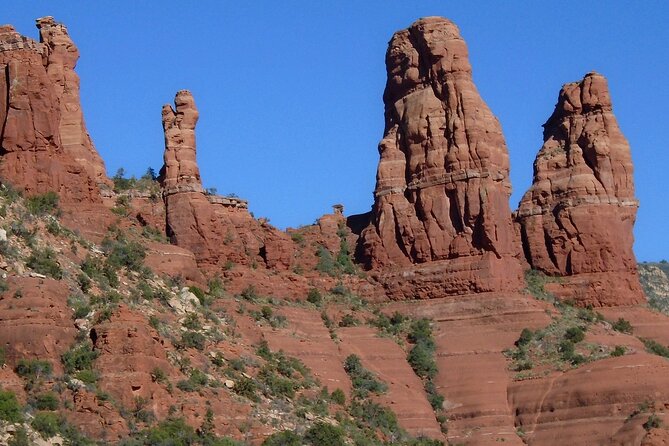
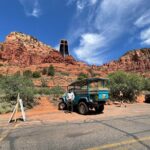
The first stop is Sedona Airport Scenic Overlook for about 25 minutes, with an admission ticket included. This is where the tour starts doing what Sedona does best: stacking iconic shapes into one view.
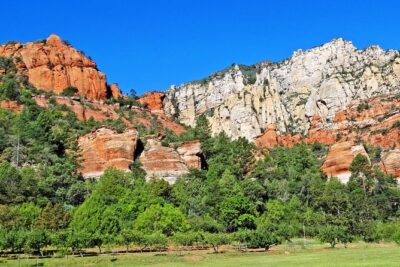
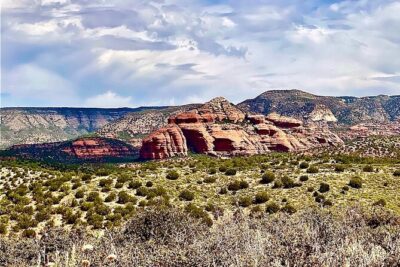
Here you’ll see the Great Dragon of Sedona, plus Standing Eagle Rock, Chimney Rock, Ship Rock, and Saddle Rock. The point isn’t just to name them—it’s to have someone guide your eyes to how they relate in the larger Sedona scene.
A viewing window like this is often where I decide whether a tour clicks for me. Do I feel like I’m getting better at noticing? On this stop, the focus is clearly on visual recognition and guided interpretation, which helps you leave with a mental map rather than a blur of photos.
Stop 2: Amitabha Stupa and Peace Park Meditation at the Amitabha Vortex
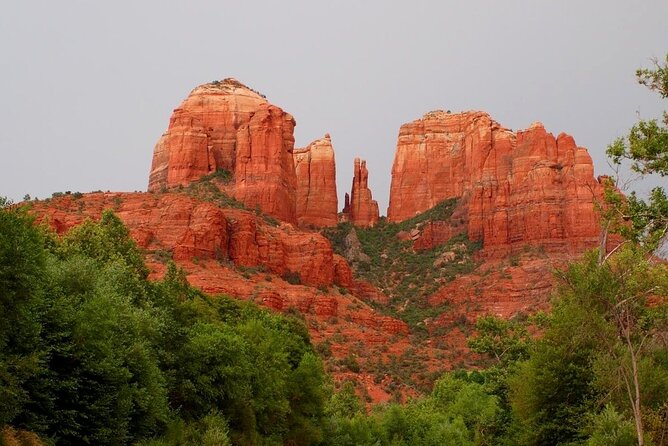
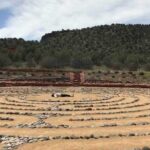
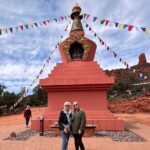
Next comes Amitabha Stupa and Peace Park for about 25 minutes, again with an admission ticket included. This stop shifts from rock viewing into something more inward: meditation at the Amitabha Vortex in the center of the 6 Pointed Star Temple.
If you’ve ever done a spiritual site that felt more like a performance than a practice, this is at least structured around an actual meditation moment. Even if you don’t buy into any particular framework, taking a pause at a designated spot can change how you experience the rest of the circuit.
The trade-off is time standing still. You’re not hopping in and out for endless walkaround photos. You’re there to slow down and follow the guide’s lead for the meditation portion, then look outward afterward.
Bell Rock, Sedona’s 7th Chakra, and the Throne of Ganesh
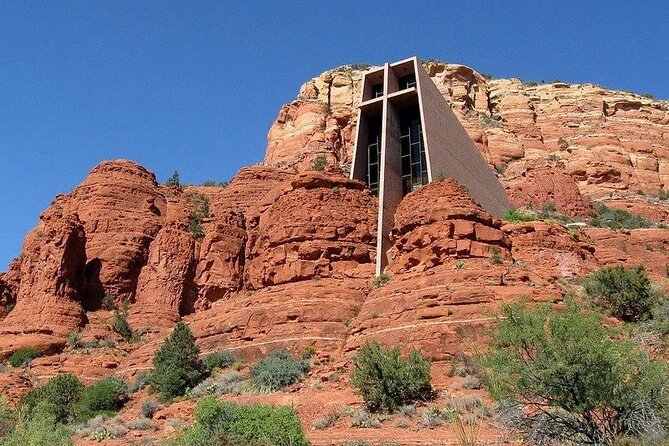
After the first two anchor stops, the tour continues with additional Sedona landmarks and spiritual place-names. You’ll see Bell Rock, referred to as Sedona’s 7th Chakra, and you’ll also be shown the Throne of Ganesh.
This is where the tour’s identity becomes very clear. It doesn’t treat Sedona as only geology and scenery. It frames sites through a spiritual lens, using terms like chakras and specific spiritual thrones to guide how you interpret what you’re looking at.
If you’re open to that kind of meaning-making, this section can feel satisfying. You’ll likely start connecting the landmarks you already know by shape to the stories you’re being taught.
If you’re not open to it, this is where you might feel the “classroom” vibe. You’ll want to pay attention to how your personality reacts to long explanations versus quiet looking.



Temples, the Court of Masau’u, and Another Chimney Rock Moment
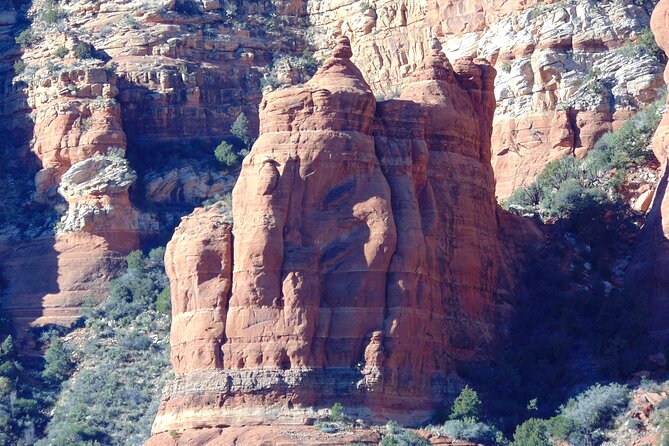
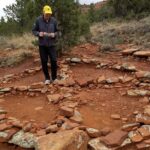
Another stop in the middle of the circuit focuses on temples leading to the Court of Masau’u, identified as the Guardian of Sedona, plus another look at Chimney Rock.
Notice what that does for your day: you’re not just seeing the same landmark once. You’re being guided to notice repeat appearances in a new context. The second Chimney Rock reference works like a mental reinforcement—sort of a check-in that encourages you to reframe what you thought you already saw.
This is also a good reminder for you, practically. If you like taking photos, bring patience. There will be a rhythm: stand, listen, look, then move. If you constantly try to multitask and shoot through the commentary, you’ll miss the reason the stop exists.
Major Vortex on Sedona Grid and the Pleiadian Contact Zone
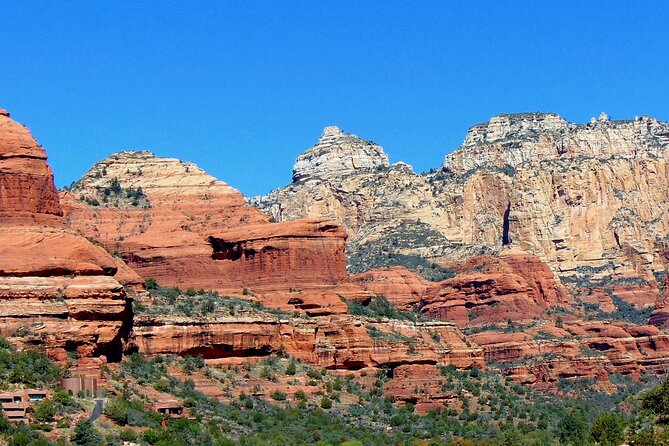
One of the tour’s signature elements is a major vortex on Sedona Grid, identified as a Pleiadian Contact Zone. This is not just a name-drop. It’s clearly presented as a key interpretation point that shapes how the guide talks about the energy—or meaning—of the places you’ve already visited.
I find these types of stops work best when you give them a fair shot without forcing belief or disbelief in the moment. You don’t have to agree with everything. You can still evaluate whether the experience helps you focus, calm down, or see patterns in the way you experience the landscape.
This section can be emotionally different from the rocky viewpoints. If you’re expecting a pure photo tour, you might feel your expectations wobble here. If you’re looking for something more “Sedona as a spiritual experience,” it may click quickly.
Sphinx and Honey Bear: The Closing Visual Payoff
The last listed visual stop includes the Sphinx and Honey Bear. By the time you reach these, the tour’s structure has usually done its job: you’ve collected multiple named landmarks, and the guide has built a coherent thread tying them together.
This kind of closing stop matters because it gives you a tangible final image to remember. It’s also a useful mental trick. When a tour ends with a clear set of sights, you’re more likely to feel satisfaction instead of “so many stops, so little memory.”
And since the tour ends back at the meeting point, you’re not forced into a complicated end-of-tour logistics puzzle.
Mark Amaru Pinkham: The Guide Style and Why It Can Matter
The experience is led by Mark Amaru Pinkham, and his approach shows up throughout the tour. The strongest positive pattern here is how much attention he gives to explanations and questions. If you like asking follow-ups and getting answers on the spot, you’re likely to enjoy the interaction.
That said, this tour does come with a particular tone: it’s built on Mark’s interpretations, stories, and spiritual framing. In a good moment, that can feel like a guided narrative that makes Sedona feel personal and meaningful. In a less compatible moment, it can feel like you’re stuck in listening mode longer than you want.
Also, route logistics matter in any driving tour. If a car blocks the route at a stop, the whole plan can tighten up. One person’s experience may be smooth; another person may feel the stress. The best approach is simple: bring flexibility, keep expectations friendly, and stay patient during the transition times.
Admission Tickets Included: Where You Get Value Early
Two stops include admission tickets: Stop 1 (Sedona Airport Scenic Overlook) and Stop 2 (Amitabha Stupa and Peace Park). For most short tours, that kind of inclusion is where you get “real value” quickly, since those costs can add up fast when you’re paying individually.
Beyond the tickets, the more important value is that you’re not just driving past. You’re using time at specific points long enough to actually experience them. That matters in Sedona, where famous landmarks are often crowded or busy if you try to DIY everything.
If you like a plan that reduces guesswork, this one helps. It gives you a checklist of named places, but with enough guidance to turn the checklist into a story you can remember.
Group Discounts, Private Format, and How That Affects Your Day
This is a private tour/activity—only your group participates. Even if you’re traveling with others, that private structure can make the experience feel less rushed. You can ask questions without competing for the guide’s attention.
There are also group discounts, which can make sense if you’re booking with friends or extended family. The practical win is cost awareness without forcing you into a bigger mixed group where everyone has different needs.
One thing you should expect: private tours can still be interactive. If you want a quieter experience, you can likely manage that by asking for guidance at key times rather than constant questions. But you’re still going to be part of the flow.
Who Should Book This Sedona Tour (and Who Might Skip It)
You’ll probably love this tour if you:
- want guided meaning alongside the scenery
- enjoy meditation or spiritual practice at a specific site
- like a structured circuit where the guide helps you learn what you’re looking at
- prefer a single morning plan rather than stitching multiple stops together solo
You might want to skip or reconsider if you:
- want mostly neutral, non-spiritual explanations
- prefer more time out of the car with minimal standing still
- get impatient with listening-heavy stops and long framing
This is not a “pop in, snap photos, move on” style tour. It’s a Sedona experience designed to be interpreted, not just observed.
Price and Value: Thinking Beyond the Number
No price is listed here, so I can’t help you compare to a specific dollar figure. But I can help you evaluate value the way I would.
Ask yourself whether you’re getting what you came for:
- Two stops with admission included early in the tour
- a total 4-hour structure that combines viewpoints and one meditation-focused moment
- a private, English-language guide experience with interactive explanations
If you want a guided narrative and don’t mind spiritual framing, you’re buying convenience plus interpretation, not just driving time.
If you only want scenery, you might feel like you paid for a belief-focused lesson. In that case, you may prefer a more independent route and shorter guided element.
Should You Book City of the Star People Tours in Sedona?
My take: book it if you want Sedona as a guided spiritual experience with real stops you can picture later—Great Dragon, Bell Rock, Amitabha Vortex meditation, and the Sedona Grid viewpoint framing. The tour is built around named landmarks and a structured pace, and that’s usually a win for first-time visitors who want to come away with a coherent sense of the place.
Skip it if you’re hoping for a mostly neutral, fact-only approach and maximum time roaming on your own. The tour’s format is not subtle about its interpretive style, and it can feel like a lesson.
If you’re unsure, consider your goal for the day. If you want to leave with calm and curiosity—plus a story you can tell—this one has a strong chance of working.
FAQ
What time does the tour start and where do we meet?
The tour meets at Whole Foods Market (1420 W State Rte 89A, Sedona, AZ 86336) and starts at 9:00 am.
How long is the tour?
The tour lasts about 4 hours.
Is it a private tour?
Yes. It’s described as a private tour/activity, so only your group participates.
What language is the tour offered in?
The tour is offered in English.
Are admission tickets included?
Yes. Admission tickets are included for Stop 1 (Sedona Airport Scenic Overlook) and Stop 2 (Amitabha Stupa and Peace Park).
What are the main stops on the itinerary?
You’ll visit Sedona Airport Scenic Overlook, Amitabha Stupa and Peace Park, and then see other Sedona landmarks including Bell Rock, Sedona’s 7th Chakra, the Throne of Ganesh, Temples leading to the Court of Masau’u, a major vortex on the Sedona Grid (Pleiadian Contact Zone), plus the Sphinx and Honey Bear.
Do I need good weather to go?
Yes. The experience requires good weather. If it’s canceled due to poor weather, you’ll be offered a different date or a full refund.
How will I get the ticket?
You’ll have a mobile ticket.
Who can participate?
It says most travelers can participate.