REVIEW · SEDONA
Sedona: Nighttime UFO & Stargazing Tour
Book on GetYourGuide →Operated by Sedona UFO Vortex Food Tours · Bookable on GetYourGuide
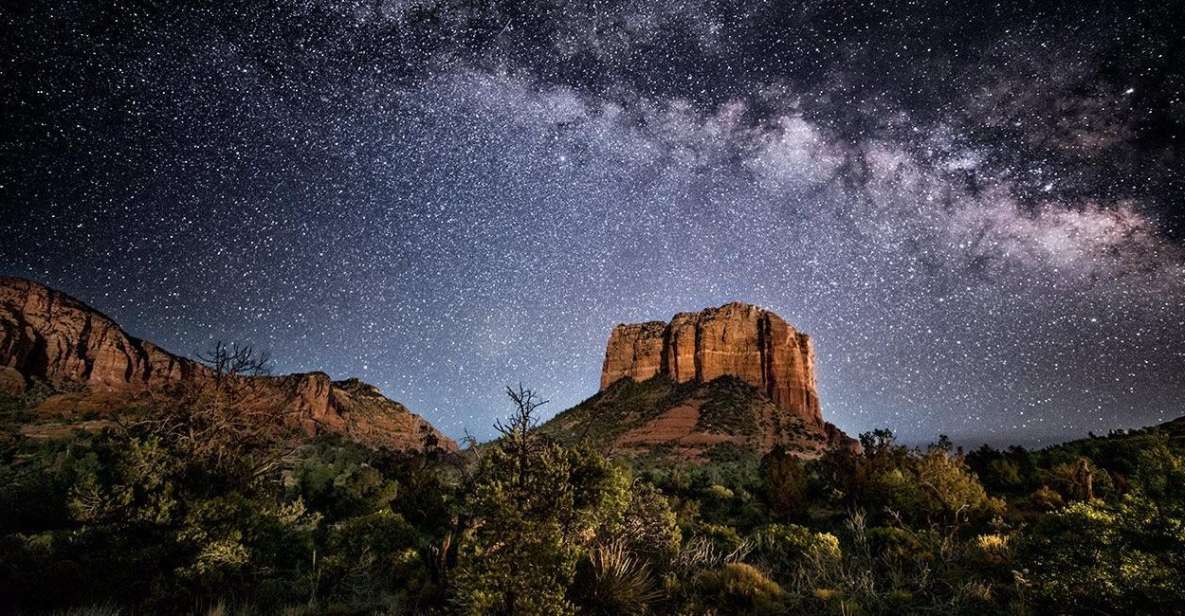
Sedona at night can feel unreal. This UFO and stargazing tour pairs Sedona’s dark sky with 3rd-generation night-vision goggles, so the heavens look sharper and more crowded than you expect. I love the two-layer approach: you get time with your naked eyes first, then the goggles show you what your brain usually misses.
The fun stays guided, too, with UFO-style scanning and storytelling led by hosts like Tom, Mike, John, or Gloria. I also love the small group (4 max) because it keeps your view clear and your questions from getting lost. One consideration: you’re outside after sunset, and cold wind or cloud cover can quickly change the vibe (or even lead to a cancellation).
In This Review
- Key things that make this tour worth a close look
- Sedona Nights Under Night-Vision Goggles: What You’re Really Buying
- How the tour experience usually unfolds
- Naked Eye First, Then the Goggles: Why the Contrast Matters
- The “game-changer” factor (and a small reality check)
- UFO Tracking and Stargazing Stories: How the Guide Keeps You Focused
- “What am I seeing?” help during the scan
- Equipment Rules and the Small-Group Setup: Comfort and Fairness
- What to expect during the goggles time
- Meeting Up, Getting to the Viewing Spot, and Staying Warm
- Dress for wind, not just temperature
- If weather shifts
- Price vs Value: Is $160 for One Hour Worth It?
- What to watch for when assessing value
- Best Nights to Book: Dark Skies, Clear Timing, and a Simple Tip
- Who Should Book This Tour (and Who Might Skip It)
- Should You Book the Sedona Nighttime UFO & Stargazing Tour?
- FAQ
- How long is the Sedona Nighttime UFO & Stargazing Tour?
- How much does it cost?
- Do they pick you up or drop you off?
- Where do we meet for the tour?
- Is the tour conducted in English?
- What should I bring?
- What equipment is included?
- Do we have to share the goggles?
- What’s not allowed during the tour?
- Can the tour be canceled due to weather?
Key things that make this tour worth a close look
- You don’t have to share a goggle: pricing is set per goggle, not per person.
- Naked-eye sky first, then goggles: you’ll compare what you can see versus what night vision reveals.
- A UFO guide runs the tracking: the focus is on lights and movements around the red-rock horizon.
- Small group, big attention: limited to 4 participants, with time to point things out as you spot them.
- Military-grade night vision is the star of the show: some groups note different “generation” branding depending on equipment.
Sedona Nights Under Night-Vision Goggles: What You’re Really Buying
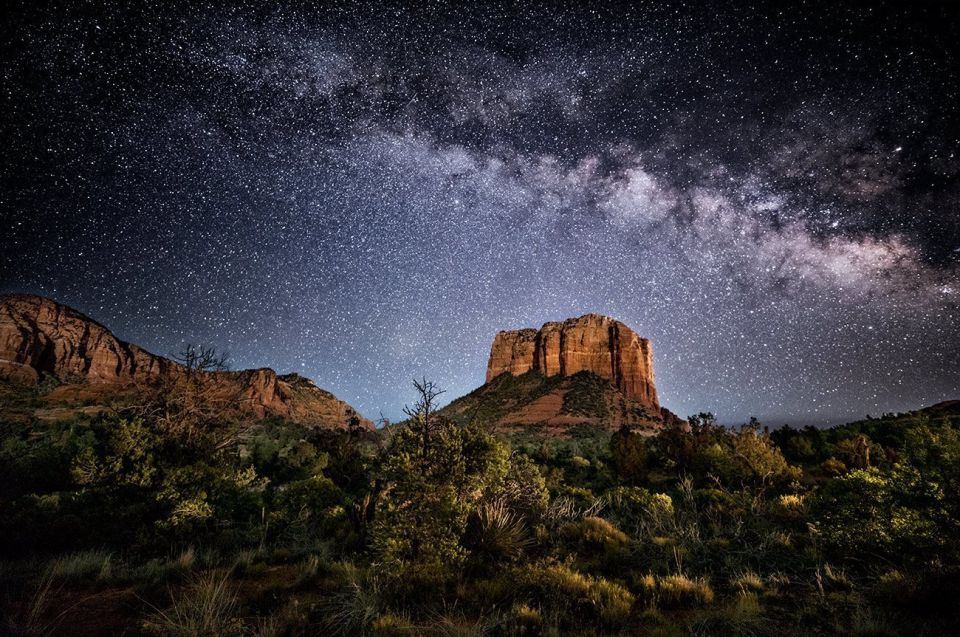
This is a short tour, just one hour, but it’s built around a specific payoff: seeing the sky in layers. With Sedona’s reputation for clear dark nights, that already helps. What makes this experience different is the switch from normal viewing to night vision—and the way your expectations recalibrate in real time.
Think of it like going from a dark theater screen to a high-resolution projector. At first you’re scanning for the obvious stuff—stars, a shooting star now and then, maybe a satellite. Then the goggles go on, and suddenly you’re watching motion signatures and faint details that don’t announce themselves to the naked eye.
And the tone matters. This isn’t a lecture series where you just hear about the sky. It’s a guided “look up and follow along” experience, with a host who frames what you see—sometimes in scientific terms, sometimes in the more fun UFO lens—so you’re not just staring, you’re actively tracking.
You can also read our reviews of more tours and experiences in Sedona.

How the tour experience usually unfolds
You’ll meet your guide by text (exact timing and location are sent the day before), then head out after sunset. Pickup and drop-off aren’t included, so you’re responsible for getting yourself there.
Once you’re on site, the host typically starts with a quick orientation, then you transition between:
- plain-eye stargazing (to calibrate what the sky looks like normally)
- night vision scanning (to reveal extra detail and movement)
- guided UFO-style tracking (flashing lights, changing brightness, and object behavior you can’t ignore)
Naked Eye First, Then the Goggles: Why the Contrast Matters
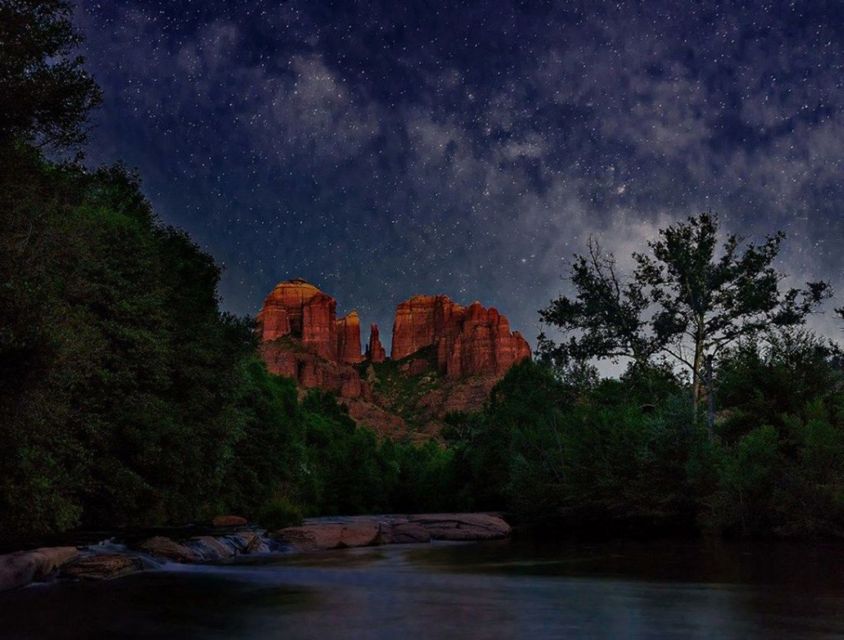
I like tours that let you compare—not just watch. That’s exactly what this one does.
The basic flow is simple. You begin with your eyes and learn the baseline: what constellations look like, what a “normal” point of light does, and how hard it is to spot small motion when the world is pitch black. Then the military-style night vision goggles change the whole conversation.
Night vision doesn’t just make stars “brighter.” It helps you notice patterns:
- objects that seem stationary to your naked eye but move in the goggles
- satellites you might only catch as brief streaks otherwise
- lights that brighten, dim, or change size perception as viewing angles shift
One of the most consistent takeaways from this tour style is the sense of scale. People often say the sky looks fuller and more alive once they put the goggles on. If you’ve only ever seen the Milky Way in photos, this is your chance to compare real darkness with enhanced visibility.
The “game-changer” factor (and a small reality check)
The goggles are the headline. That’s not marketing fluff—it’s the mechanism. Your attention gets pulled into the sky more naturally once you can actually see movement and faint objects.
Still, be realistic about one thing: for a lot of phenomena, you’ll be seeing “unidentified” signals rather than proof. The host usually helps you separate likely explanations (like satellites) from the truly confusing stuff. That’s part of the fun, but it’s also why expectations matter.
UFO Tracking and Stargazing Stories: How the Guide Keeps You Focused
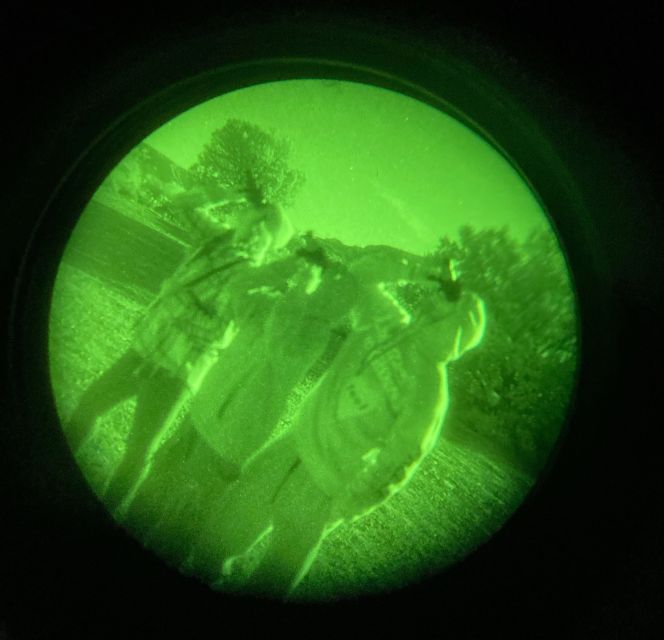
The UFO angle here isn’t random. The host actively guides your attention to what’s happening overhead.
You’re typically told what to watch for, such as:
- flashing lights
- objects that appear to change brightness quickly
- points of light that seem to weave in and out near the mountains and ridgelines around Sedona
This is where guides matter. Different hosts bring different voices, and you can hear that in who’s been leading tours—names that show up include Tom, Mike, John, Steve, Gloria, and Anita. When the host is having fun, it transfers to you. When they’re organized, you waste less time guessing and more time actually observing.


“What am I seeing?” help during the scan
A good night sky experience has two parts: the visuals and the interpretation. This tour leans hard into both.
You’ll get context as the session goes along—sometimes through a scientific framing, sometimes through the UFO lore angle. The key is that your guide isn’t leaving you alone with a sky full of lights. You’re being prompted to look in specific ways, at specific behaviors.
A couple of moments tend to stick with people:
- spotting satellites and even named objects like Starlink
- catching shooting stars during the session
- seeing objects that look like they’re doing something weird until you understand the viewing geometry
Equipment Rules and the Small-Group Setup: Comfort and Fairness
This tour is small by design: limited to 4 participants. That’s a big deal for a night activity. In bigger groups, the view gets crowded fast and questions get skipped. Here, you’re more likely to actually keep your goggles on the sky long enough to see what the host is trying to point out.
Also, the equipment setup is central to the value. The tour states that you don’t have to share a goggle, and pricing is per goggle rather than per person. Practically, that means your experience doesn’t depend on who’s willing to trade positions in the dark.
That said, one caution is worth keeping in mind: if you’re traveling as a group, double-check the equipment allocation when you book. One past group reported an equipment mismatch compared with expectations, which is the kind of problem that’s fixable when you catch it early.
What to expect during the goggles time
Once the goggles come out, you’ll likely be toggling between:
- listening and scanning as a group
- using what you see to point out objects to others (often with a light/laser pointer in the mix)
- adjusting your head angle to follow movement you couldn’t see before
This is also why warm layers matter. You’ll be outside long enough to feel it, and being cold makes night vision scanning harder than it should be.
Meeting Up, Getting to the Viewing Spot, and Staying Warm
No pickup and drop-off means you plan your own logistics. Your guide sends a text the day before with the exact meeting time and location, which is helpful in a place where “close” can still mean “not close enough” in the dark.
Because the tour starts after sunset and its schedule changes every other week, don’t assume the meeting time stays the same across dates. On the day of the tour, you’ll want to go by the provider’s latest confirmation.
Dress for wind, not just temperature
Bring warm clothing. This isn’t a “light jacket and you’re fine” night. People report that even when they dress for cold, wind can still cut through during the scan.
In practical terms, I’d wear:
- a warm layer you can move in
- something wind-resistant
- gloves or at least something that keeps your fingers functional (you’ll want to adjust goggles and point up)
Also note the rules: smoking isn’t allowed, and no food and drinks are part of the tour. Eat beforehand so you’re not tempted to bring snacks out into the dark.
If weather shifts
The tour may get canceled if the weather is too cloudy. That matters, because clouds turn stargazing into “dimming.” If you’re planning more than one night in Sedona, it can be smart to build flexibility around your best-weather option.
Price vs Value: Is $160 for One Hour Worth It?
At $160 per person for a one-hour tour, the price isn’t casual. Families and budget-minded travelers have good reason to pause.
So here’s the honest value math: you’re paying for two things—
- access to night vision goggles that change what you can see
- a host who actively directs attention and helps you interpret what you spot
If you’re the type of traveler who loves astronomy but wants a shortcut into the “wow” factor, the equipment is doing real work. If you show up thinking you’ll get a standard stargazing talk, you’ll be disappointed. But if you want the sky to feel “alive” and you’re ready to look upward the whole time, it can feel fair.
Small group size also supports the price. With only 4 people, the session doesn’t feel like a conveyor belt. You’re more likely to get real back-and-forth attention, and you’re less likely to spend the hour waiting your turn.
What to watch for when assessing value
- One hour is short, but night sky sessions get more productive as your eyes adapt. Short can be good.
- Equipment sharing should not be required, but confirm equipment setup in advance if you’re booking for multiple people.
- If the sky is cloudy, value drops fast because the whole point is visibility.
Best Nights to Book: Dark Skies, Clear Timing, and a Simple Tip
You’ll get the most from this kind of tour on nights with low haze and good visibility. One practical hint from the experience of people who’ve done it: try to pick a New Moon date when possible for darker skies.
That doesn’t guarantee UFO drama or nonstop shooting stars. But it does give your naked-eye viewing a better foundation, which makes the contrast with night vision even more noticeable.
Also, because the tour starts after sunset and changes its timing schedule every other week, check your message closely and show up with enough time to settle in before it gets fully dark.
Who Should Book This Tour (and Who Might Skip It)
This tour fits best if you’re one of these travelers:
- You want a hands-on night activity instead of a museum-style experience.
- You’re curious about UFO culture but still want a guide who helps you compare likely explanations.
- You love stargazing and want the wow-factor of enhanced viewing.
It might be less ideal if you:
- strongly prefer longer activities (one hour feels quick)
- get frustrated easily when weather changes plans
- expect total quiet and zero background light (some viewing spots can be close to parking or other people, which affects darkness)
If you go, go ready to look up and stay present. This isn’t a “take photos all night” situation. It’s an observation session.
Should You Book the Sedona Nighttime UFO & Stargazing Tour?
Book it if you want a guided night sky experience where night vision goggles do the heavy lifting and where you’ll spend the hour actively scanning rather than passively listening. The combination of small group size, a UFO-style guide approach, and the equipment makes it a standout “do something different” plan for Sedona.
Skip it (or choose a different night) if you hate cold weather sessions, can’t handle the possibility of a cloudy cancellation, or feel uncomfortable paying premium prices for a one-hour outing.
If your main goal is “see stars, learn constellations” without the UFO angle, you might want a more astronomy-focused alternative. But if you’re open to the mystery side while still getting practical help finding what’s moving across the sky, this is a fun, memorable way to spend Sedona after dark.
FAQ
How long is the Sedona Nighttime UFO & Stargazing Tour?
It lasts 1 hour.
How much does it cost?
The price is listed as $160 per person.
Do they pick you up or drop you off?
Pickup and drop-off are not included.
Where do we meet for the tour?
Your guide sends you a text the day before your tour with the exact time and location.
Is the tour conducted in English?
Yes, the live tour guide is English.
What should I bring?
Bring warm clothing.
What equipment is included?
You’ll use night vision goggles (3rd generation military night vision is listed).
Do we have to share the goggles?
The tour information says you do not have to share a goggle, and pricing is per goggle rather than per person.
What’s not allowed during the tour?
Smoking is not allowed, and food and drinks are not included/allowed.
Can the tour be canceled due to weather?
Yes. The tour may get canceled if the weather is too cloudy.