REVIEW · SEDONA
The Night Sky Star Story, Galaxy, and Sedona Story Tour
Book on Viator →Operated by Adventure Explore and Soar · Bookable on Viator
Sedona gets magical after dark. This 2-hour, small-group star story tour pairs mythic constellation tales with big-picture astronomy you can follow with your own eyes, no telescope needed. The comfort setup is real (chairs, blankets, and warmers), but the format leans toward guided storytelling and sky instruction, so if you want only hands-on spotting, you may want to set expectations.
You meet at 77 Cultural Park Pl in Sedona at 7:30 pm and stay put at one location. The guide points out major targets like Orion, Sirius, Cassiopeia, Leo, Gemini, Taurus, the Pleiades, Jupiter, Saturn, plus the Big Dipper and Little Dipper, often with the sky lined up for low moonlight. Dress warmly. Sedona nights can bite.
In This Review
- Key highlights I’d pencil in first
- One location, one cozy sky session in Sedona
- Chad’s style: stories, humor, and participation
- What you’ll learn: constellations, culture, and the big-picture view
- Constellation stories in two cultural lanes
- Big-picture astronomy, explained in Earth terms
- When the group sees more than expected
- The tools that make naked-eye stargazing easier
- The main sky targets on your night schedule
- Sedona at night: 7:30 pm, weather risk, and what to wear
- Price and value: what $100 buys in this format
- Who this tour is for (and who should consider another option)
- Small practical notes that help your night go smoothly
- Should you book this Night Sky, Star Story, Galaxy, and Sedona Story Tour?
- FAQ
- What time does the Night Sky Star Story, Galaxy, and Sedona Story Tour start?
- Where is the meeting point?
- How long is the tour?
- Is this a telescope tour?
- What is provided to keep you warm?
- How big is the group?
- Is the tour offered in English?
- What happens if it is cloudy or the weather is poor?
- Are pets and alcohol allowed?
Key highlights I’d pencil in first
- Constellation stories you can actually remember instead of a lecture dump
- Indigenous sky connections alongside Greek/Roman myths
- Naked-eye astronomy with big-picture concepts you can use anywhere
- Play-doh Milky Way visuals, a planisphere, and a laser pointer for fast orientation
- Comfy seating with chairs, blankets, and hand warmers
- Small groups (max 15) so you’re not lost in the crowd
One location, one cozy sky session in Sedona
This tour is designed around staying in place. You park yourself at a single viewing spot with chairs, then the guide works the sky above you in a way that builds from simple “what you’re looking at” to how the night sky moves as Earth turns and your position changes.
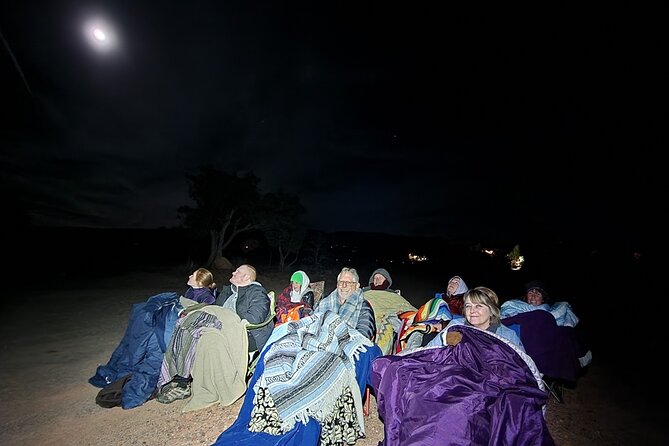
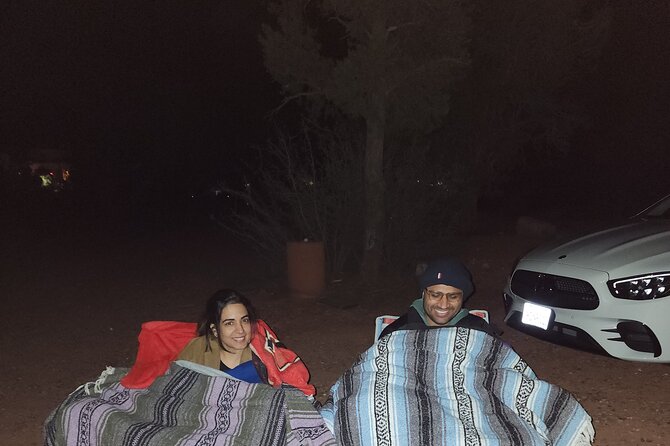
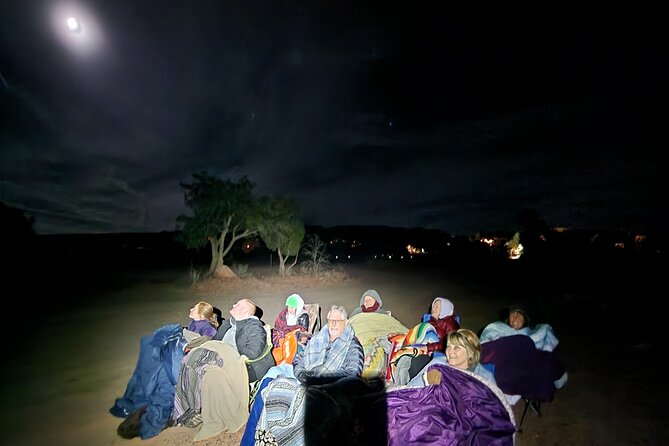
The stars are the main event, but the comfort matters too. Multiple reviews call out the blankets, hand warmers, and the fact that you can stay seated comfortably for the full run time. That means you’re not doing the typical thing where you freeze, stand up, and lose the thread right when the sky gets interesting.
The sky conditions can still affect what you see. The tour info notes clouds are uncommon in Sedona at night and points to local wind patterns that sometimes clear things up near showtime. Still, it’s weather-dependent, and the tour’s strength is how well it keeps the experience going even when visibility isn’t perfect.
You can also read our reviews of more evening experiences in Sedona

Chad’s style: stories, humor, and participation
The guide behind this experience is Chad, and his approach is part theater, part science lesson. He’s guided night sky tours for years, has professional tour guiding experience since the mid-2000s, and has lived in Sedona since the late 1990s—so he’s not reading the sky like a script. He’s using it to tell a story and help you see patterns that you’d miss on your own.
What stands out is how he keeps people involved. Reviews describe encouragement to chime in, and the vibe is interactive rather than silent-watch. You’re not just receiving facts; you’re getting a guided way to find your bearings fast—then you’re invited to track what he’s pointing out as it shifts through the evening.
There’s also a clear emphasis on tone. Some tours lean into “quirky for quirky’s sake.” Here, the feedback is that it stays engaging and funny without becoming weird in a way that distracts from learning.
What you’ll learn: constellations, culture, and the big-picture view
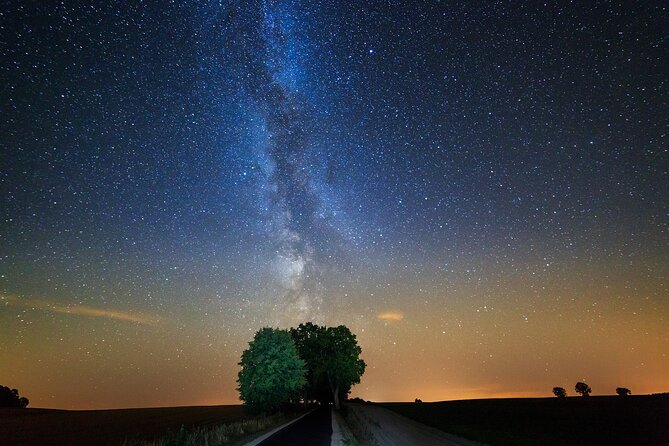
This isn’t a telescope tour. The whole pitch is about seeing what’s visible with your own eyes and understanding how those shapes relate to myths, culture, and astronomy concepts.
Constellation stories in two cultural lanes
You’ll hear Greek and local indigenous constellation associations, connected through stories. The point isn’t to replace your existing knowledge—it’s to add layers. If you’ve already heard Greek mythology tied to the sky, you’ll still likely pick up new angles on how the stories map to the constellations people point out from Earth.
One review specifically highlights indigenous beliefs in the Americas as a strong part of the experience. That matters because it shifts the tour from “stars as entertainment” into “stars as a way humans have made meaning for a long time.”
Big-picture astronomy, explained in Earth terms
The tour’s astronomy piece focuses on the big picture: how the solar system and galaxy relate to what you can see from Earth. You’ll get concepts presented in a way that’s meant to click even if your last science class was years ago.
A useful example from the feedback: the guide’s explanation of why stars seem to move at different rates comes across as easy to follow, letting people connect motion to what they’re actually watching. That’s the kind of understanding you can carry forward. It’s not just “spot Orion”; it’s “know what your sky is doing.”


When the group sees more than expected
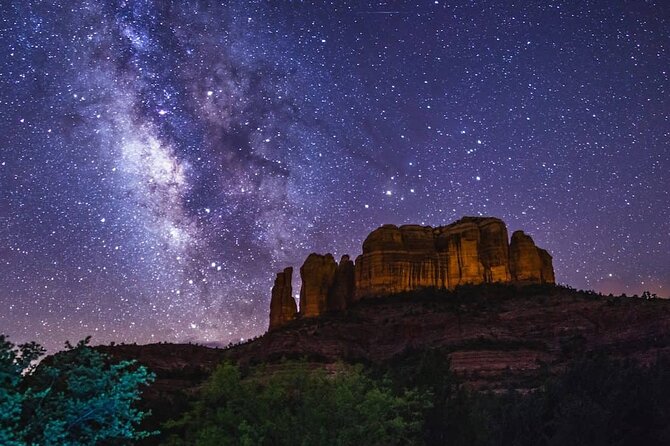
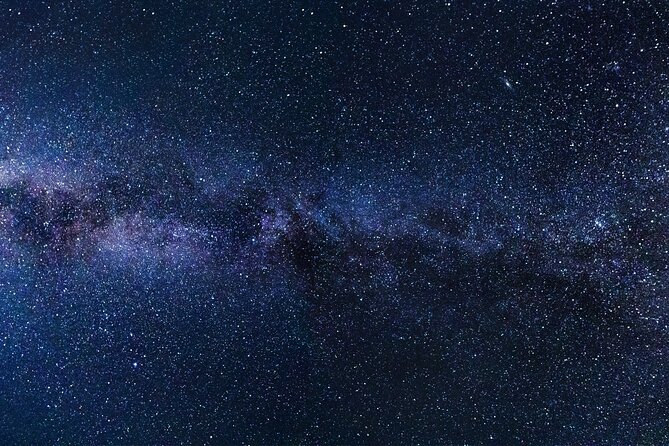
On clear nights, reviews mention seeing the Milky Way. Some nights also bring shooting stars—one report describes an outing that included 11 shooting star sightings. Even if your sky is less dramatic, the structure is built to keep you learning while you wait for the sky to cooperate.
The tools that make naked-eye stargazing easier
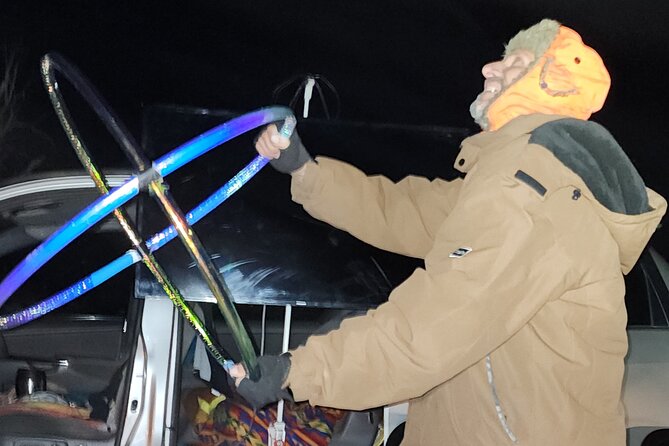
A big part of why this tour works is the visual support. The tour uses a play-doh Milky Way concept, plus a planisphere. Those aren’t fancy gadgets for show. They’re there to help you translate the real sky into something you can navigate while you’re standing under it.
You’ll also use a laser pointer. Reviewers call out the laser pointer repeatedly as a reason the tour feels worth it—because it helps you follow along when you might not know whether the “bright star” you’re seeing is the one the guide is naming. It also helps when constellations are faint or spread out.
At least once in the guide’s approach, there’s mention of a star app on a big screen as a supporting layer. The key is that you still leave with the ability to find constellations without needing any equipment. The tour is built for what you can do with your eyes, right then.
The main sky targets on your night schedule
The tour description highlights a lineup of common, show-stopping targets. Depending on the date and season, you can expect the guide to reference constellations and planets that include:
- Orion
- Sirius (a key bright star)
- Cassiopeia
- Leo and Gemini
- Taurus and the Pleiades
- Jupiter and Saturn
- The Big Dipper and Little Dipper
If you go in expecting those names and then learn how they connect to stories and motion, you’ll get a satisfying arc. You’ll start by matching shapes, then you’ll shift into understanding why those shapes look the way they do from your angle on Earth.
Sedona at night: 7:30 pm, weather risk, and what to wear
This tour runs at 7:30 pm, which is exactly the point when your eyes are learning to see in low light and the sky is dark enough to pick up detail. That timing is also why dressing matters.
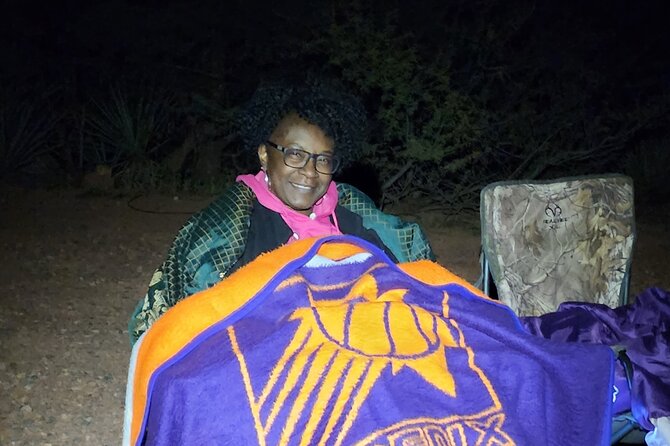
The tour info and reviews agree on one simple rule: dress warmly. The guide provides blankets and hand warmers, and at least one review recommends gloves and a stocking cap for colder stretches of the year. You’ll enjoy the storytelling more when you’re not dealing with numb fingers.
Weather matters too. Clouds do happen, and the tour notes Sedona averages about 17 inches of rainfall a year, plus a local microclimate that can push clouds out as night winds change in the Oak Creek canyon area. Even with that optimism, the tour is still weather-dependent.
If it’s cloudy on your date, there’s a friendly refund option noted in the tour details: you can cancel for a full refund based on your discretion, and you can even stay for the whole tour and still ask for the refund. It’s rare to see that kind of flexibility.
Price and value: what $100 buys in this format
At $100 per person for about 2 hours, this isn’t the cheapest thing you can book in Sedona. The question is whether it’s value for your style of travel.
Here’s where I think it holds up. You’re paying for a guide who’s doing structured teaching, with hands-on-style visuals (play-doh Milky Way, planisphere, laser pointer) and a comfortable setup that keeps you in the chair. You’re also paying for a format that works without telescopes, which means you’re not at the mercy of complicated equipment or extra add-ons.
The group size helps too. With a maximum of 15 travelers, it’s easier for the guide to keep up with your questions and adjust the pace. That small-group feel shows up in reviews that mention interaction and participation.
What you should weigh: if you’re mainly chasing a guaranteed view of planets or a clear Milky Way photo, weather still controls the outcome. The tour will teach you either way, but the sky itself is the final decider.
Who this tour is for (and who should consider another option)
This works best for you if you like:
- Stories with real sky connections (Greek plus indigenous associations)
- A guided way to learn constellations quickly
- Astronomy explained in Earth terms, not heavy math
- A comfortable night activity where you can sit and focus
It may feel less ideal if:
- You want a pure “stand here and look” experience with minimal talking
- You prefer a telescope-first approach
- You want very little myth and lots of strictly scientific observation
One mixed review noted the storytelling felt repetitive or more lecture-like, and another suggested showing certain visuals earlier to help people know what to look for. That doesn’t negate the tour’s value, but it’s good context. If you learn best by seeing the target first, arrive mentally ready for the guide’s narrative path.
Small practical notes that help your night go smoothly
A few details are worth knowing before you go:
- Pets and alcohol aren’t meant to come along.
- Service animals are allowed.
- You’ll have a mobile ticket.
- The tour is offered in English.
- It runs near public transportation, so you’re not forced into a complicated logistics puzzle.
- The experience ends back at the meeting point.
Also, since the tour is about naked-eye viewing, I recommend showing up a bit early so you can get settled and let your eyes adjust. Even with a laser pointer, your own dark adaptation makes everything easier to follow.
Should you book this Night Sky, Star Story, Galaxy, and Sedona Story Tour?
Book it if you want a night in Sedona where the stars become a story you can follow and a lesson you can reuse later. You’re getting a structured constellation tour, cultural connections (Greek and indigenous), and big-picture astronomy without telescopes—plus the very practical comfort of chairs, blankets, and hand warmers. Chad’s humor and animation are a big part of why people remember the evening.
Skip it or consider a different astronomy option if your priority is a hands-on telescope session, or if you strongly dislike tours that include a lot of narrative and guided participation. In that case, you might prefer a different kind of stargazing outing.
If you’re flexible about clouds and you’re excited by the idea of learning the night sky as a human story, this is one of the best ways to spend a Sedona evening.
FAQ
What time does the Night Sky Star Story, Galaxy, and Sedona Story Tour start?
The tour starts at 7:30 pm.
Where is the meeting point?
The meeting point is 77 Cultural Park Pl, Sedona, AZ 86336.
How long is the tour?
It runs about 2 hours and 5 minutes.
Is this a telescope tour?
No. The experience is focused on what you can see with your own eyes, with the guide using visuals and a laser pointer.
What is provided to keep you warm?
Chairs are provided, along with blankets and hand warmers.
How big is the group?
The tour has a maximum of 15 travelers.
Is the tour offered in English?
Yes, it is offered in English.
What happens if it is cloudy or the weather is poor?
Clouds can happen. The tour notes clouds are uncommon, but if it’s canceled due to poor weather you’ll be offered a different date or a full refund. It also says that if it’s cloudy the night of your tour, you have the option to cancel for a full refund based on your discretion, even if you choose to stay for the whole tour and ask for a refund.
Are pets and alcohol allowed?
No pets and no alcohol are allowed. Service animals are allowed.