REVIEW · SEDONA
The Original Sedona UFO and Stargazing Night Tour
Book on Viator →Operated by Sedona UFO Tours LLC · Bookable on Viator
Sedona at night can feel like a different planet. This tour pairs upgraded military night-vision goggles with guided UFO stories under real constellations, so your evening becomes part science-leaning skywatch and part mystery road trip. I especially like how you’re shown exactly what to look for through the goggles, and I also like the steady, guided pacing between dark-sky spots near Fay Canyon and Sedona’s 89A corridor; just note that you may spend a lot of time standing on uneven pavement with limited seating.
The other big thing: you drive your own vehicle and follow the guide to each viewing area, so you’ll want to be comfortable with short drives, roadside parking, and arriving early. If you’re prone to neck strain or have trouble with standing, this setup might not fit your comfort level.
In This Review
- Quick hits you’ll care about
- Price and time: what $155 buys you in Sedona
- The meeting point and how the own-car route really works
- What happens on your UFO-and-stars drive: the stop-by-stop plan
- Stop by Thunder Mountain views
- Adjacent to Fay Canyon
- Red Rock crossing on the way
- Crystal Magic Psychic Center area for the second location
- Passing by the road to the Stupa (but no visit)
- Using military night vision: what it adds to stargazing
- The guide angle: what you’ll learn to recognize
- Star pointer for adults 18+
- The reality check: moon, clouds, and light pollution
- Comfort, timing, and the “you’ll stand here” question
- Rules that affect your night: recording, flash, and gear handling
- Small group energy: why the 6-person limit helps
- Is the UFO story for everyone?
- Who should book this tour (and who should skip)
- Should you book the Original Sedona UFO and Stargazing Night Tour?
- FAQ
- FAQ
- Do I need my own vehicle for this tour?
- How long is the Sedona UFO and Stargazing Night Tour?
- Are night vision goggles included?
- Are heaters provided in winter?
- Is there a restroom at the viewing locations?
- Can I record video or take photos with flash?
- What if the weather is bad?
- What is the group size?
- Is this tour recommended if I have difficulty standing or walking?
Quick hits you’ll care about
- Military-grade night vision: You’ll get time looking through upgraded goggles, with goggles shared in small groups.
- Dark-sky stops near Fay Canyon: Each location is chosen for stargazing views around Sedona’s red-rock country.
- UFO tales tied to what you see: The guide explains what people spot and why it might look strange.
- Heaters in cold months: When winter temps hit, you won’t be totally out in the cold.
- Small group size: The tour caps at 6 travelers, so it’s not a giant crowd.
- Rules around lights and recording: No flash, and no audio or video recording during the session.
Price and time: what $155 buys you in Sedona
At $155 per person for about 1 hour 45 minutes, this isn’t a casual “walk and look up” stargazing event. The price makes sense when you factor in the main draw: upgraded military night-vision goggles, plus winter heaters, a small-group format, and a guided narrative that keeps the sky time moving.
In real terms, you’re paying for three things:
1) Access to gear most people can’t rent or use effectively on their own
2) A guide who helps you aim, focus, and make sense of what you’re seeing
3) Multiple viewing locations, so you’re not stuck in one spot if conditions aren’t perfect
It also helps that this tour tends to book ahead (it’s commonly reserved about a month ahead). If you’re traveling in peak season or during special nights, I’d treat it as a “book early” activity, not an afterthought.
You can also read our reviews of more evening experiences in Sedona

The meeting point and how the own-car route really works
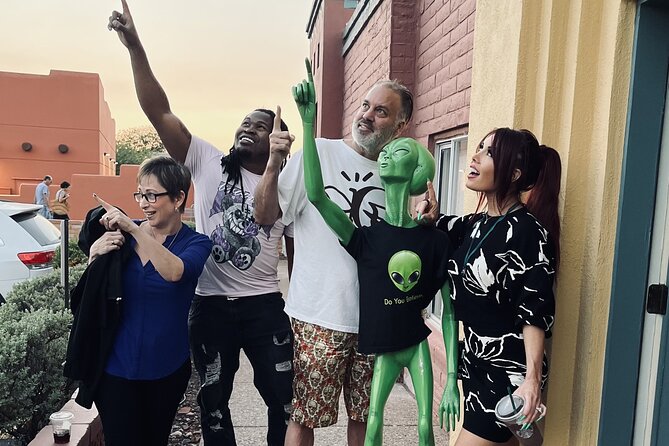
You start at Sedona UFO Tours LLC, 1890 W State Rte 89A Suite D, Sedona, AZ 86336. From there, you make your own way to the meeting spot, check in, then the guide takes over the direction.
Here’s the key logistics point: there’s no private transportation. You’ll need your own vehicle, and you’ll follow the guide to the first viewing location and then to the next stops. The route passes by known Sedona landmarks along the way (more on that in a minute), but you should think of it like a guided night drive plus stargazing stops, not a bus tour.
Also plan to be punctual. You’re told to arrive 30 minutes early to check in, and late check-ins are treated as a no-show with no refund or reschedule unless you communicate in advance.
Good to know if you’re coming from a hotel base: the meeting area is listed as near public transportation, but since you’ll need your car for the viewing drive, public transit doesn’t really solve the biggest requirement. Plan for a parking strategy in advance.
What happens on your UFO-and-stars drive: the stop-by-stop plan
The route is designed to get you to viewing spots with enough darkness to make the night sky worth your effort, while also giving the guide places to set the story and point your attention.
Stop by Thunder Mountain views
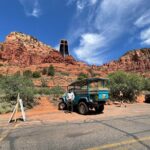
You’ll travel as the guide sets you up for the first viewing location, with Thunder Mountain mentioned as a point along the way. This isn’t just scenery talk. Early in the evening, the goal is to get you oriented fast—where you are, where to aim your attention, and how to use the goggles comfortably.
Adjacent to Fay Canyon
Next, you’ll pass the road that leads to Fay Canyon, and your viewing site is adjacent to the Fay Canyon area. This is one of the tour’s core stargazing zones, and it’s where you’ll start putting on the military-grade night vision goggles and taking in constellations.
This stop matters because stargazing isn’t only about equipment. It’s about finding a dark enough pocket and keeping the group moving before the sky viewing window narrows too much.
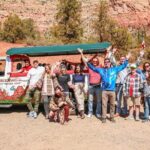
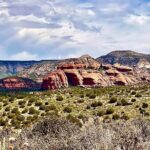

Red Rock crossing on the way
The drive includes a pass by a Red Rock crossing en route to the next site. Think of these “passing landmarks” as part of why this tour is more engaging than a one-location watch: you’re constantly transitioning between spots, which keeps your night from feeling like waiting around.
Crystal Magic Psychic Center area for the second location
One of the featured viewing zones is near Crystal Magic Psychic Center. You’ll go there as part of the multi-stop flow, with the tour also noting passes on 89A around this area.
The practical takeaway: if you’re trying to see both the big sky views and the smaller “what is that light?” moments, this kind of second-location stop gives the guide a fresh canvas to work with.
Passing by the road to the Stupa (but no visit)
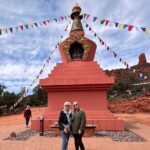
On the way to the viewing spot, you’ll pass the street that would take you to the stupa—but the tour does not go to the stupa. So if you’re hoping to tack on an extra attraction visit, don’t build that into your plan.
After the final viewing, you follow the group back to the meeting point and the tour ends where you started.
Using military night vision: what it adds to stargazing
The headline feature is the goggles. This tour provides upgraded military night-vision goggles, with one pair per 2 adults (for ages 11 and up). Kids 10 and under share with an adult, and kids may not hold the goggles due to the cost of the equipment.
That sharing detail is important. You’ll enjoy the experience more if you treat night vision like a “high-impact look” rather than constant, everyone-holds-it-all-night access. The tour also notes that many people can’t keep their heads tilted up for long, so sharing is built into how they handle comfort and time.
The guide angle: what you’ll learn to recognize
A standout theme from the tour style is that the guide helps you read the sky. One guide-led explanation you can expect is how to think about what you’re seeing—like why certain objects may not be satellites based on orbital height, and how the night sky looks different through the goggles.
You might hear UFO-focused stories. Some people come in with full belief. Others come in skeptical. Either way, the guiding approach is built around explaining why things look the way they do and pointing you toward constellations and patterns you can actually identify.
Guides you may meet include Shay and Chey, both named in tour feedback, and both are described as energetic and focused on making sure people are having a good time.
Star pointer for adults 18+
For adults over 18, you’ll be provided use of an approved star pointer. That’s a nice practical touch because it helps keep pointing accurate without blinding other people’s night vision.
The reality check: moon, clouds, and light pollution
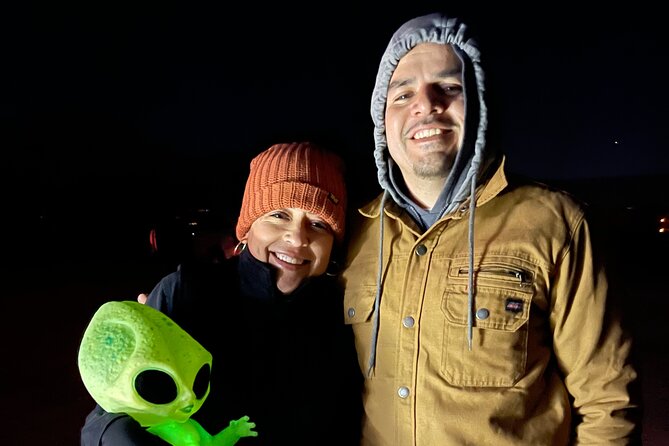
This tour is weather-dependent. Even with night vision gear, the sky doesn’t follow the script. If it’s cloudy, your view can soften or scatter. The tour also says it attempts to run every night, but decisions can be made at check-in or 30–60 minutes before if weather or area closures require it.
One practical issue you should plan for: a bright moon or thin cloud cover can reduce how crisp the Milky Way and faint stars look. Night vision helps, but it won’t turn a bright sky into a perfect desert-black night.
If weather is poor, you might be offered a different date or a full refund. If conditions are disappointing but not a total washout, you may still have time under the goggles—just don’t expect every night to look identical.
Comfort, timing, and the “you’ll stand here” question
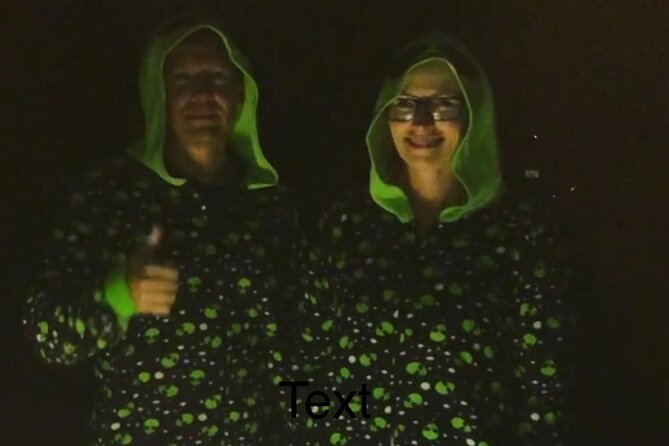
This is where you’ll want to be honest with yourself before booking.
The tour is not recommended if you have difficulty standing or walking. You’ll be dealing with uneven pavement, gravel, or dirt, and you’re asked to wear closed-toe shoes.
Seating is limited. Some feedback points out a shortage of chairs, and the tour also encourages sitting options when possible. Winter has heaters, which helps a lot, but heaters don’t solve the standing-on-rocks part.
If you’re going, I’d pack for comfort like you would for a chilly outdoor concert:
- layers for your legs and arms
- shoes with grip
- something small to sit on if permitted by staff (the tour rules matter here)
Also, keep an eye on how long you’ll be viewing. The pace moves between locations, but the viewing itself can mean long stretches looking up.
Rules that affect your night: recording, flash, and gear handling
This tour has equipment-sensitive rules, and they matter.
You’re told:
- Audio and video recording is not permitted at any time
- Flash photography is not permitted
Breaking those rules can get your tour shortened. The goal is simple: the night vision gear is sensitive and other guests’ night vision experience can be ruined fast by bright flashes.
There’s also a no restrooms at the viewing location note. So use the bathroom before you head out from the meeting spot.
Small group energy: why the 6-person limit helps
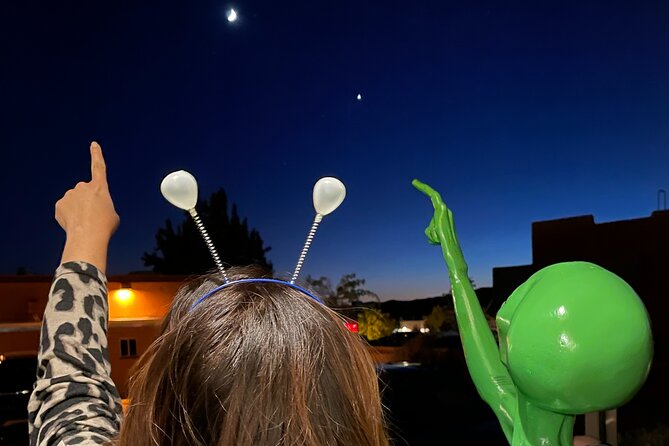
With a maximum of 6 travelers, this isn’t the kind of tour where you spend the night stuck behind a crowd. You’re more likely to get help aiming, using the goggles, and listening to the stories clearly—especially if you’re juggling the shared-goggle schedule.
That small group size also changes the vibe: it feels closer to a guided experience than a one-size-fits-all script.
Is the UFO story for everyone?
It depends what you want from your evening.
This tour is clearly built around UFO tales tied to what people see above Sedona, and it pairs that narrative with real stargazing. Some people love the belief-friendly, fun angle. Others like it because it includes explanation—why objects might not be what people think.
If you’re expecting a strict astronomy class with a quiet, no-story approach, you might find the narrative-heavy format less your style. But if you want a night where you learn how to look up and you also get an entertaining guide-led storyline, you’ll likely have a good time.
A balanced way to think of it: you’re buying a guided “what’s up there and why does it look that way” night, using night vision as the star of the show.
Who should book this tour (and who should skip)
This tour fits best if you:
- want a hands-on night vision stargazing experience
- enjoy UFO stories but still like learning how to spot and interpret sky sights
- are comfortable driving your own car and following a guide between short stops
- don’t mind standing for stretches and want the view enough to make it worth it
You might skip it if:
- you have trouble standing or walking (it’s not recommended)
- you want guaranteed bathrooms at viewing spots (there aren’t any)
- you need a fully seated, minimal-standing format
- you dislike storytelling and want a quiet astronomy-only session
Should you book the Original Sedona UFO and Stargazing Night Tour?
If you want one Sedona night that feels different from the usual “look at red rocks at sunset” routine, this is a strong choice. The value hinges on the equipment (upgraded military night vision) and the guided pacing between dark-sky areas like the Fay Canyon adjacent site and the zone near Crystal Magic on 89A.
Book it if you’re flexible, comfortable with standing, and excited to see the sky in a way your phone can’t replicate. I’d also book with enough lead time because it often sells out and because weather can affect what you actually see.
Skip or choose something else if comfort is your top priority. Limited seating, uneven ground, and limited restrooms aren’t small things when you’re paying to enjoy an experience.
FAQ
FAQ
Do I need my own vehicle for this tour?
Yes. You follow the guide to the viewing locations in your own vehicle. The tour specifies not to arrive by Uber, Lyft, taxi, or other transportation.
How long is the Sedona UFO and Stargazing Night Tour?
It runs about 1 hour 45 minutes (approx.).
Are night vision goggles included?
Yes. The tour includes upgraded military night vision goggles. One pair is provided per 2 adults age 11 and up, and children 10 and under share with an adult.
Are heaters provided in winter?
Yes. Heaters in winter are included.
Is there a restroom at the viewing locations?
No. There are no restrooms at the viewing location.
Can I record video or take photos with flash?
No. Audio/video recording is not permitted, and flash photography is also not permitted.
What if the weather is bad?
The tour requires good weather and attempts to run every night. If it’s canceled due to poor weather, you’ll be offered a different date or a full refund.
What is the group size?
This tour has a maximum of 6 travelers.
Is this tour recommended if I have difficulty standing or walking?
No. It’s not recommended for travelers who have difficulty standing or walking.
If you want, tell me your travel month and whether you’re comfortable with standing outdoors, and I’ll help you judge how well this tour matches your schedule and energy level.