REVIEW · SEDONA
Sedona Night Hike and Stargazing Tour
Book on GetYourGuide →Operated by Arizona Red Rock Adventures LLC · Bookable on GetYourGuide
Stargazing starts with a desert trail. This Sedona night hike turns the red-rock dark into a hands-on science lesson, especially with UV flashlights for scorpion scouting and WFR-certified guides who keep the experience grounded, safe, and calm.
Here’s the main catch: you are hiking after dark, so it’s not a casual stroll. Wear comfortable shoes and come ready for a few hours outside, including time on a rocky trail in cooler evening air.
In This Review
- Key Things You’ll Remember
- Sedona After Dark: Why Doe Mountain Really Works
- The 4-Hour Plan: Van Pickup, Doe Mountain Hike, and Summit Stargazing
- UV Flashlights and Scorpion Scouting: What You Actually See
- Reading the Night Sky with a Guide and a Laser Pointer
- Safety on a Night Hike: WFR Training Matters
- Small Group Feel, Real-World Timing, and Snacks
- What to Bring: Comfortable Shoes, Water, and a Camera You’ll Use
- Price and Value: What $495 Gets You
- Who This Tour Fits Best (and Who Should Skip It)
- Meet Your Guide: The Calming Energy That Makes Night Easier
- Should You Book This Sedona Night Hike and Stargazing Tour?
- FAQ
- Where do we meet for the Sedona night hike?
- How long is the tour?
- What is included in the price?
- How much does the tour cost?
- What time of year or timing does the guide consider for the route and stars?
- What should I bring?
- Is this tour safe for first-time night hikers?
Key Things You’ll Remember
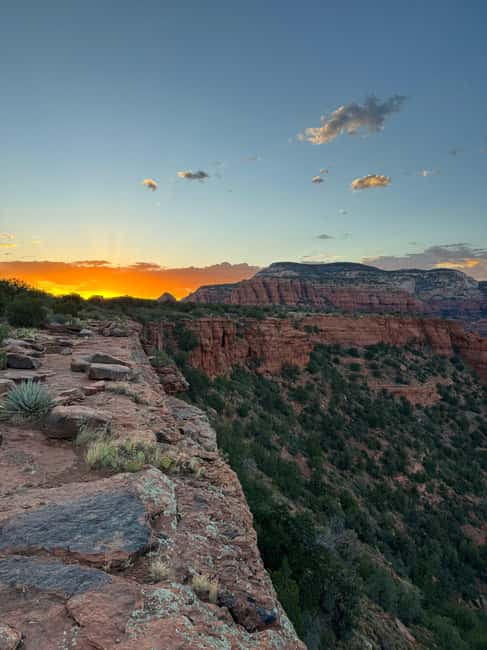
- UV scorpion scouting: glowing blue-green scorpions under ultraviolet light.
- Doe Mountain at night: sunset-to-stars views from a guided hike.
- WFR safety focus: Wilderness First Responder certification plus orienteering skills.
- Moon-and-constellation planning: the trail choice adapts to timing and conditions.
- A laser-guided sky: you’ll identify constellations and planets during stargazing.
- Nocturnal wildlife searching: you’ll look for signs of owls, bats, and other night creatures.
Sedona After Dark: Why Doe Mountain Really Works
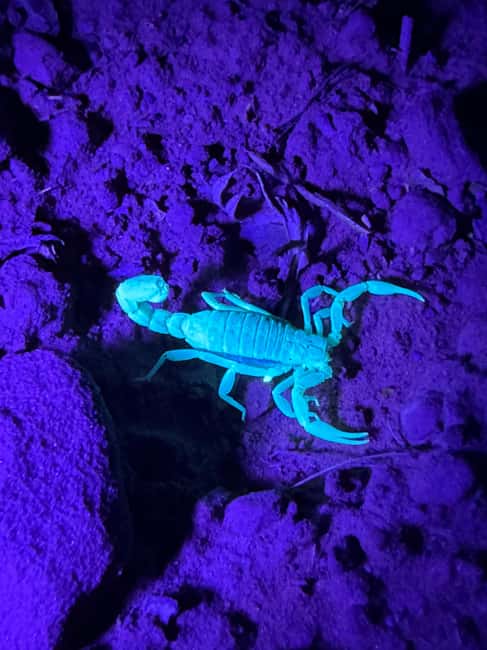
Sedona is famous for daytime views, but the red rocks change their mood fast after sunset. On this tour, you’re not just stopping at a viewpoint. You’re hiking up Doe Mountain to reach a darker vantage where the stars actually look like stars.
I like how the experience blends nature and instruction without turning into a lecture. You get outdoor time, guided science-style commentary, and practical star spotting using a guide’s tools and pointers.
One more smart touch is how the route gets chosen based on real conditions. The plan can shift with the moon alignment, the season, and current tourism levels, aiming for a quiet sky and a smoother night outdoors.
You can also read our reviews of more evening experiences in Sedona

The 4-Hour Plan: Van Pickup, Doe Mountain Hike, and Summit Stargazing
You start at Whole Foods Market, meeting in the southwest corner of the parking lot. Then you ride by van for about 15 minutes to get you onto the trail without wasting your evening driving around.
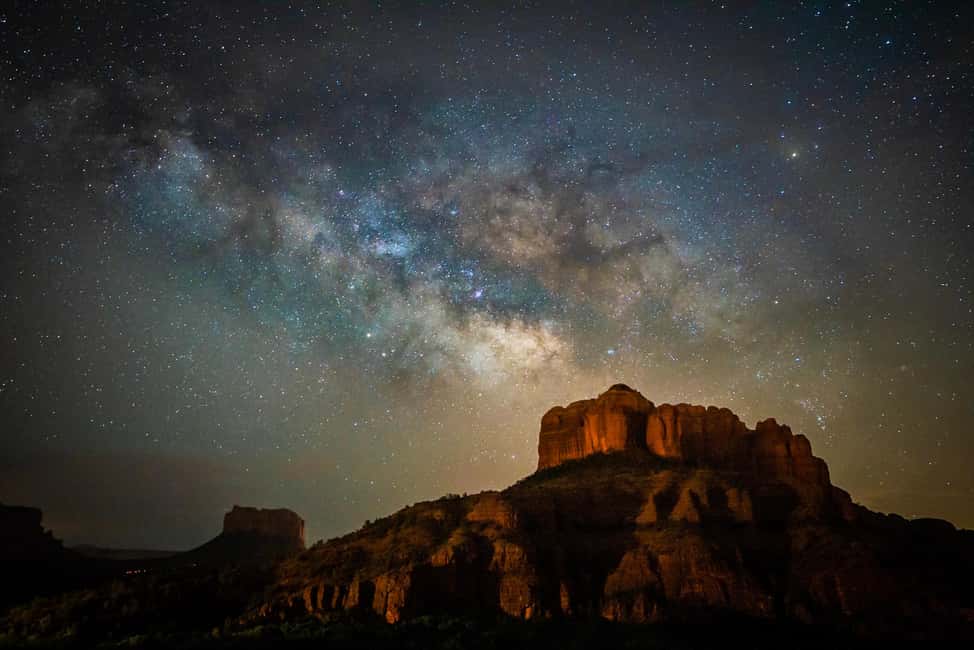
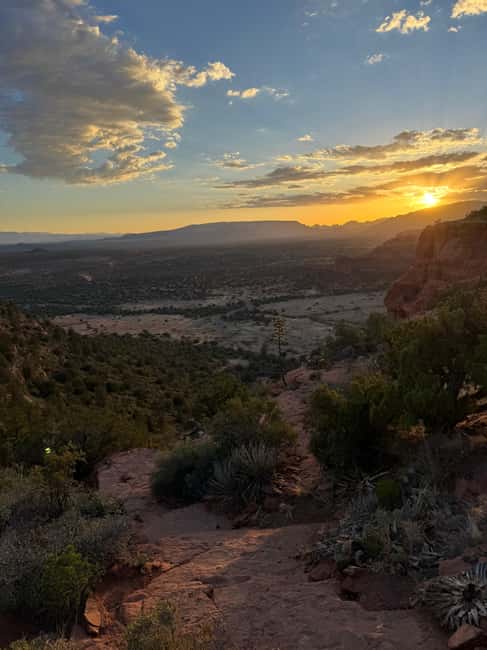
The night hiking portion runs roughly 3 hours, with the guide shaping the pace for the group. You begin just before sunset, hike toward a vista where the red rocks glow in the fading light, and then keep going once it gets fully dark. That timing matters because you get two different shows: the day-to-night color shift, and then the deeper sky when the stars pop.
At the summit, you pause for stargazing. With minimal light pollution, the sky can look dramatic, and the guide uses a laser to point out constellations and planets overhead. If you’re hoping to see the Milky Way, this is the type of setup that can make it possible, especially when skies are clear and dark.
You’ll also be watching and listening for nocturnal life. The guide looks for signs of creatures like owls and bats, and they help you interpret what you’re seeing so it feels like night ecology, not guesswork.
UV Flashlights and Scorpion Scouting: What You Actually See
This is the part many people talk about later, because it feels a little unreal the first time you witness it. The tour brings UV flashlights specifically to help you spot scorpions after dark.
Under ultraviolet light, scorpions glow a vivid blue-green, which makes them visible in cracks, under rocks, and along the trail. That means you’re not just hearing stories. You’re getting a safe, structured way to observe how desert animals live when it’s cooler and quieter.
A good rule for your expectations: this is wildlife spotting, not wildlife guaranteeing. You’re searching and learning, and the guide helps you notice the right details rather than rushing you through the dark.
Also, this is a desert activity with a learning goal. The guide frames scorpion scouting as part of nighttime survival—where the animals hide, how they move, and why they’re active when temperatures drop.
Reading the Night Sky with a Guide and a Laser Pointer
Stargazing is one thing. Learning a few things you can carry home is another. This tour does both.
As you’re at the summit, you’re not left to guess which constellation is which. Your guide identifies constellations and planets with a laser pointer, and they share sky highlights in plain, practical language. If you’ve never tried it, it’s a great way to get your bearings fast because the guide is pointing in real time and explaining what you’re seeing.
Sedona’s location is part of why this works. When light pollution is low, star patterns become easier to pick out, and the night sky feels closer than you expect.
And if you already know some astronomy, you’ll still benefit from the structure. Someone who knows the sky can point out what’s worth your attention that night, rather than giving you a generic star map and hoping you’ll figure it out.
Safety on a Night Hike: WFR Training Matters
Night hikes have a reputation for being a little intimidating, even for confident walkers. What changes that feeling is the WFR-certified approach.
Your guide is a Wilderness First Responder, and they’re also skilled in orienteering. In plain terms, that means they’re trained to handle emergencies and keep the hike organized, even when visibility drops and trails get darker.
I also like that the tour doesn’t frame this as a dare. The night portion is guided, and the group experience is designed for comfort and control—so you can pay attention to the stars and wildlife without feeling like you have to prove anything.
One useful mindset for you: treat this as “guided adventure,” not a casual evening walk. If you’re nervous about rocks, uneven ground, or hiking in the dark, lean into the fact that the guide is there to help you step confidently.
You can also read our reviews of more hiking tours in Sedona

Small Group Feel, Real-World Timing, and Snacks
This is listed as a small group and also a private group experience, which is a nice combo. It typically means you’re not trying to hear instructions over a crowd, and you can get more personal guidance while navigating the night trail.
The tour includes van transportation, plus pickup and drop-off at a designated location. That removes the stress of figuring out where to park and how to coordinate timing on a tight schedule.
You also get snacks, which matters more on night hikes than people think. Even if the activity is not fast, it’s still several hours outdoors with changing temperatures. Having a little food in the mix helps you stay comfortable through the hike and stargazing.
What to Bring: Comfortable Shoes, Water, and a Camera You’ll Use
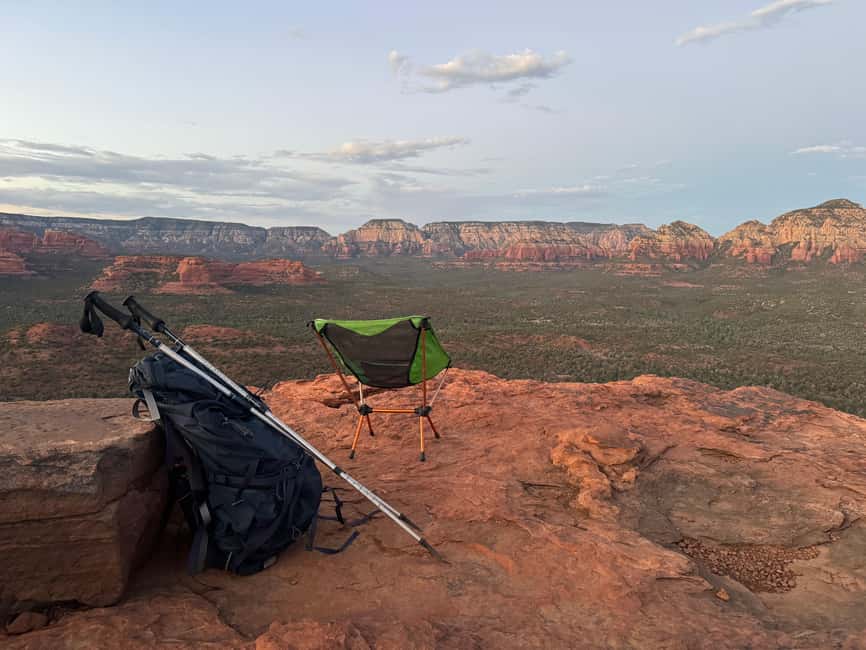
The essentials list is simple, and that’s good news. Bring comfortable shoes with solid grip, a hat, water, and a camera if you want to capture the night sky and red-rock views.
The advice also calls for sunscreen and weather-appropriate clothing. Even though it’s a night hike, you start before sunset, and Sedona sun can be sneaky.
A practical tip: plan for temperature swings. You’ll likely feel warmer during the hike and cooler once you stop to stargaze. Layers usually win in desert evenings.
And if you care about photos, aim to use your time at the summit well. That’s when the sky looks best and when your camera can capture the strongest contrast between stars and the dark desert.
Price and Value: What $495 Gets You
The price is listed as $495 per group, up to 1. That structure can be confusing at first glance, but the value is easier to see when you look at what’s included.
You’re paying for more than a ticket to a viewpoint. You’re getting transportation by van, expert local guidance, a guided hike up Doe Mountain, stargazing instruction, scorpion scouting with UV lights, and snacks. Add in the WFR certification, plus the fact the guide selects the trail based on moon and sky conditions, and you’re really paying for an evening that runs on good timing and smart decisions.
If you’re comparing this to doing it solo, the guide’s value is obvious once it’s dark. Finding the right conditions for a clear sky, managing the hike, and knowing what to look for with wildlife and astronomy are all the hard parts.
If you’re a couple or a small group, this can feel like a reasonable splurge because you’re not sharing your experience with strangers at every step. If you’re traveling with kids, it can also feel like money well spent because the guide can keep the group moving and learning without turning it into chaos.
Who This Tour Fits Best (and Who Should Skip It)
This works best if you enjoy outdoor time plus learning. If you like a mix of adventure, science, and night sky magic, you’ll probably love it.
It also suits first-timers. Guides are there to make you feel safe and comfortable as the trail gets darker. People who feel uneasy about night hiking tend to appreciate a guide who keeps the pace steady and explains what you’re doing next.
For families, the reviews highlight patience and a friendly approach with kids, which is a big deal when you’re hiking on uneven ground and dealing with shifting attention spans.
Age limits are part of the safety plan. It’s not suitable for babies under 1 year, and it’s not suitable for people over 95 years.
And if you have mobility limits that make rocky terrain tough, be careful. This is a hike up Doe Mountain, and it takes about 3 hours of hiking within a 4-hour overall tour.
Meet Your Guide: The Calming Energy That Makes Night Easier
A great guide changes the whole night. In past experiences, I’ve seen the difference firsthand through what guides are praised for: calm confidence, patience, and good explanations.
For example, one guide named Ty is specifically noted for being knowledgeable and patient, including when hiking with young children. He’s also praised for keeping a first night hike feeling manageable and fun, including while dealing with surprises in the dark.
Even if you don’t get the same guide, you can expect the same core approach: the tour is meant to feel safe, structured, and friendly, not scary or rushed.
Should You Book This Sedona Night Hike and Stargazing Tour?
If you want Sedona after dark with more than just a view, I think you should book it. This is one of those rare tours where the unique moment is built into the experience: the red rocks before full darkness, the sky at the summit, and the UV scouting that turns desert wildlife into something you can actually spot.
Book it if you care about stargazing and want help identifying constellations and planets, or if you want a guided way to see scorpions up close under safe UV lighting. Book it if you’ll appreciate the WFR safety mindset and prefer a small-group vibe where you can hear instructions and move with confidence.
Skip it if you’re looking for a gentle, seated evening, or if a 3-hour hike on a mountain trail after sunset sounds like too much. It’s outdoorsy, it’s real desert night hiking, and that’s exactly why it works.
If your goal is a memorable night in Sedona that feels both adventurous and well-run, this is a strong pick.
FAQ
Where do we meet for the Sedona night hike?
You’ll meet in the southwest corner of the Whole Foods Market parking lot.
How long is the tour?
The total tour duration is about 4 hours, and the hike portion is about 3 hours.
What is included in the price?
Included are an expert local guide, small-group experience, van transportation, pickup and drop-off at the designated location, guided hike up Doe Mountain, stargazing, scorpion scouting, and snacks.
How much does the tour cost?
The price is $495 per group up to 1.
What time of year or timing does the guide consider for the route and stars?
The trail choice is tailored based on the season, current tourism levels, and the alignment of the moon and constellations above.
What should I bring?
Bring comfortable shoes, a hat, a camera, and water. Sunscreen is also recommended in the tour tips.
Is this tour safe for first-time night hikers?
Guides are certified Wilderness First Responders (WFR) and skilled in orienteering, and the experience is designed to make nighttime hiking feel possible and surprisingly safe.